
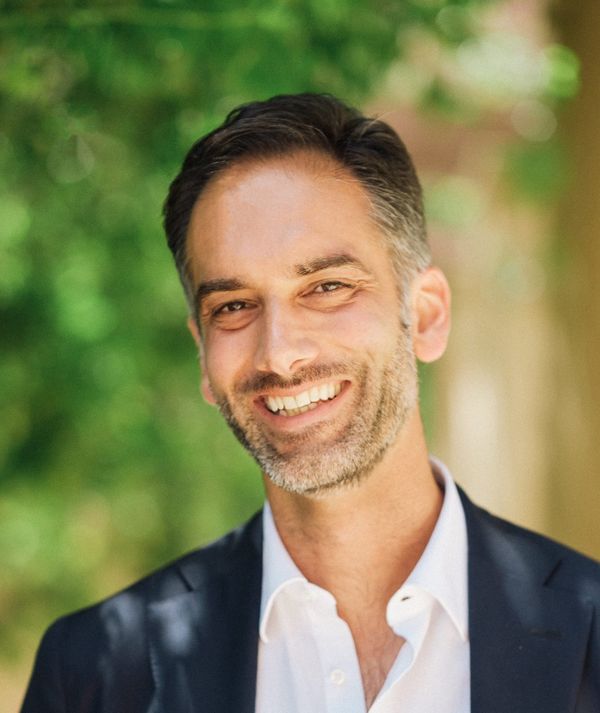
Neale Mahoney
Neale serves as the Trione Director of Stanford Institute for Economic Policy Research (SIEPR) and the TG Wijaya Professor of Economics at Stanford University. He is Chair of California's Independent Consumer Fuels Advisory Committee and previously served on the White House National Economic Council and on the Consumer Financial Protection Bureau Academic Research Council. His research focuses on healthcare, consumer finance, and energy markets.

Kathryn Anne Edwards
Kathryn's Anne Edwards research focuses on the intersection of labor markets and public policy, including unemployment and unemployment insurance (UI); recessions and recoveries; women’s labor supply; poverty alleviation; retirement security; and Social Security. She has testified three times in front of Congress about economic policy. She writes a weekly column on the economy for Bloomberg and is the host of the Optimist Economy podcast.

Rory Johnston
Rory Johnston is a leading voice on oil market analysis, advising institutional investors, global policy makers, and corporate decision makers, and his views are regularly quoted in major international financial and industry media. Prior to founding Commodity Context, Rory led commodity economics research at Scotiabank where he set the bank’s energy and metals price forecasts, advised the bank’s executives and clients, and sat on the bank’s senior credit committee for commodity-exposed sectors.

Rachel Ziemba
Rachel Ziemba is a geo-economic and country risk expert focused on how government policies impact energy and resource markets. She runs Ziemba Insights, an advisory firm that supports clients in their macroeconomic scenario analysis and policy due diligence. Much of her work focuses on how governments are reshaping markets to meet economic and political goals – and what this means for investors. Rachel regularly serves as an expert commentator in key media outlets including CNBC, Bloomberg, New York Times, Financial Times, and her research has been cited by a range of international institutions including the International Monetary Fund, World Bank and European Central Bank as well as Academic publications. She holds a bachelor’s degree from the University of Chicago with honors, and a Master of Philosophy degree in international relations with a specialization in international political economy from St. Antony’s College, Oxford University (with distinction). She holds the Sustainability and Climate Risk certificate from GARP.

Amar Reganti
Amar Reganti has over two decades of experience in fixed income markets in both the public and private sectors. From 2018 to 2026, Amar Reganti was a managing director and fixed income strategist at Wellington Management, where he worked closely with the firm's global clients and investors on fixed income allocations, market dynamics, and strategies. He was also the publisher of Wellington's flagship monthly Fixed Income Drivers and Observations strategy report. Prior to joining Wellington, Amar worked as a strategist at Grantham Mayo Van Otterloo in fixed income and asset allocation from 2015 to 2018. Previously, he served as the deputy director of the Office of Debt Management at the US Treasury Department (2011 – 2015). He also held roles in fixed income markets as an investment grade portfolio manager at UBS Global Asset Management (2008 – 2011), a fixed income derivatives solutions strategist at Merrill Lynch (2006 – 2008), and a credit analyst at UBS Investment Bank (2000 – 2003). Amar also served as the external representative on the United Nations Development Fund's investment committee from 2024 to 2026. Amar has an MBA from the University of Chicago Booth School of Business (2006), a Master of Science in European Political Economy from the London School of Economics and Political Science (2000), and a Bachelor of Arts from Vassar College (1999).
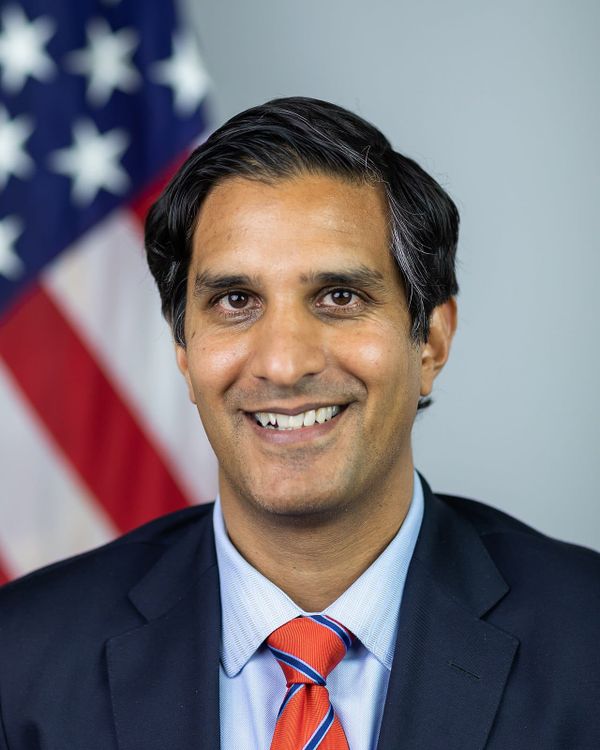
Daleep Singh
Mr. Singh oversees the firm’s Global Macroeconomic Research team, leading the formulation of the outlook across
developed and emerging economies, analyzing key structural shifts, and synthesizing the implications for financial
markets.
Mr. Singh served as U.S. Deputy National Security Advisor for international economics and Deputy Director of the
National Economic Council for the Biden Administration. In this capacity, he led the Administration’s policymaking
process for a range of issues at the intersection of economic policy and national security, including economic
statecraft, supply chain resilience, innovation policy, digital assets, and energy security. As the U.S. Sherpa to
the G7, G20, and APEC, he also represented the President in major international fora. Previously, Mr. Singh was an
Executive Vice President and Head of the Markets Group at the New York Federal Reserve, an Assistant Secretary for
financial markets and debt management at the Treasury Department, as well as a Deputy Assistant Secretary for
international affairs. Mr. Singh has also worked in the private sector, primarily at Goldman Sachs on the trading
floor.
Mr. Singh earned a BA from Duke University and graduate degrees from MIT and Harvard University, with a focus on
international economics. In 2022, he was named as one of the Bloomberg 50, an annual list of innovators,
entrepreneurs, and leaders who have changed the global business landscape.
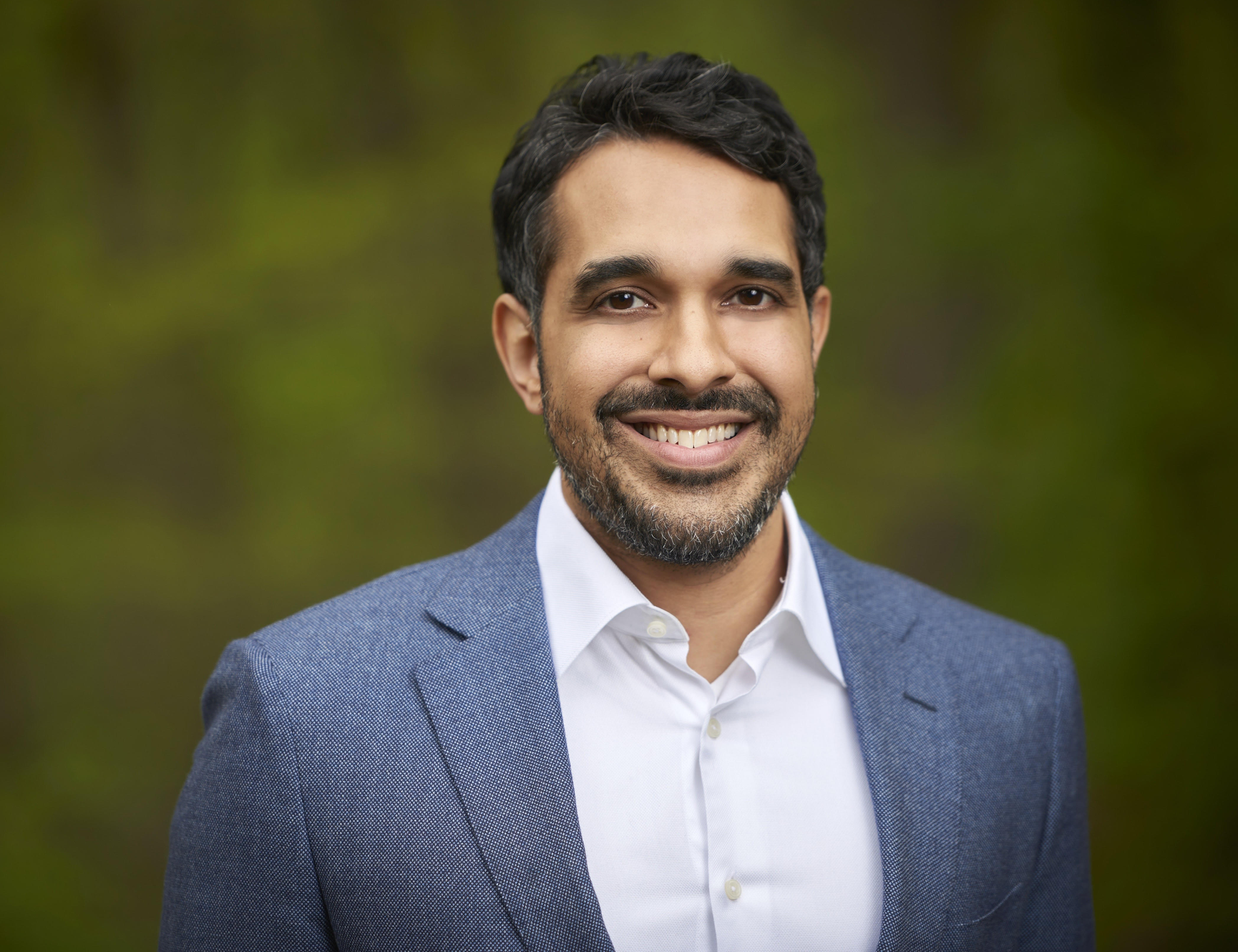
Bharat Ramamurti
Bharat Ramamurti served as Deputy Director of the National Economic Council in the Biden-Harris Administration from 2021 through 2023. In that role, he worked with Congress to secure the enactment of several landmark pieces of economic legislation, and helped lead the Administration's efforts on student debt, competition policy, small business, broadband, housing, technology and social media platforms, financial regulation, and more. Before joining the Administration, he was appointed as a Member of the Congressional Oversight Commission for the CARES Act. He previously served as the top banking and economic policy advisor for Senator Elizabeth Warren, including during her presidential campaign.

Martha Gimbel
Martha Gimbel has worked in economic policy and research in the executive branch, the legislative branch, the private-sector, and in philanthropy. Previously she was a Senior Advisor at the White House Council of Economic Advisers, Director of Economic Research at Indeed.com, Senior Manager of Economic Research at Schmidt Futures, Senior Economist and Research Director at Congress’s Joint Economic Committee, and a Senior Policy Advisor to the Secretary of Labor. She has commented widely on the economy, including in the New York Times, the Wall Street Journal, CNN, NPR, and other news outlets.

Alan Cole
Alan's areas of focus at Tax Foundation's Center for Global Tax Policy include business taxes, cross-border taxes, and macroeconomics. In addition to work at Tax Foundation, Alan Cole has served on the Joint Economic Committee and with The Conference Board, and published on a variety of economic topics. Alan has a bachelor’s degree in economics from Yale University and an MBA majoring in finance and public policy from the Wharton School. Alan lives in Washington, D.C., with his wife and daughter.

Peter E. Harrell
As a member of Carnegie’s American Statecraft program, Harrell’s research focuses on issues of U.S. domestic economic
competitiveness, trade policy, and the use of economic tools in U.S. foreign policy.
From January 2021 through 2022, Harrell served at the U.S. White House as senior director for international
economics, jointly appointed to the National Security Council and the National Economic Council. In that role,
Harrell co-led President Biden’s E.O. 14017 supply chain resilience agenda; worked on the global digital, 5G, and
telecommunications strategies; spearheaded negotiations with the European Union on the U.S.-E.U. Data Privacy
Framework; served as the White House representative to the CFIUS committee; and worked on U.S. sanctions and export
controls towards Russia in response to Russia’s invasion of Ukraine. From 2012 to 2014, Harrell served as the deputy
assistant secretary for counter threat finance and sanctions in the State Department’s Bureau of Economic and
Business Affairs.
From 2009 to 2012 he served on the State Department’s Policy Planning Staff, where he was instrumental in developing
Secretary of State Hillary Clinton’s economic statecraft agenda. Harrell is a magna cum laude graduate of Princeton
University and holds a JD from the Yale Law School.

Hassan Khan
From 2023-2025 he was at the CHIPS Program Office in the Department of Commerce, serving as the Director of Economic Security from 2024 onwards. Prior to joining the Department of Commerce, Hassan was a New Product Introduction Operations Program Manager at Apple in the Home division. From 2018 to 2020, Hassan was with McKinsey’s San Francisco Office serving clients in the consumer electronics manufacturing and semiconductor manufacturing industries. He received his PhD from Carnegie Mellon’s department of Engineering and Public Policy in 2017. His doctoral work focused on the semiconductor industry’s response to the end of CMOS scaling. From 2010-2012 he was a process and integration engineer at Twin Creeks Technologies. Twin Creeks was developing novel, flexible crystalline silicon solar cells. Hassan received his Bachelors of Science in Chemical Engineering from UC Berkeley in 2010. Go Bears!

Peter Conti-Brown
Peter Conti-Brown is the Class of 1965 Associate Professor of Financial Regulation at The Wharton School of the University of Pennsylvania and Nonresident Fellow in Economics Studies at The Brookings Institution. A financial historian and a legal scholar, Conti-Brown studies central banking, financial regulation, and public finance, with a particular focus on the history and policies of the US Federal Reserve System. He received a law degree from Stanford Law School, a PhD in financial history from Princeton, and an AB (magna cum laude) from Harvard College. He and his wife Nikki are the parents of four children.
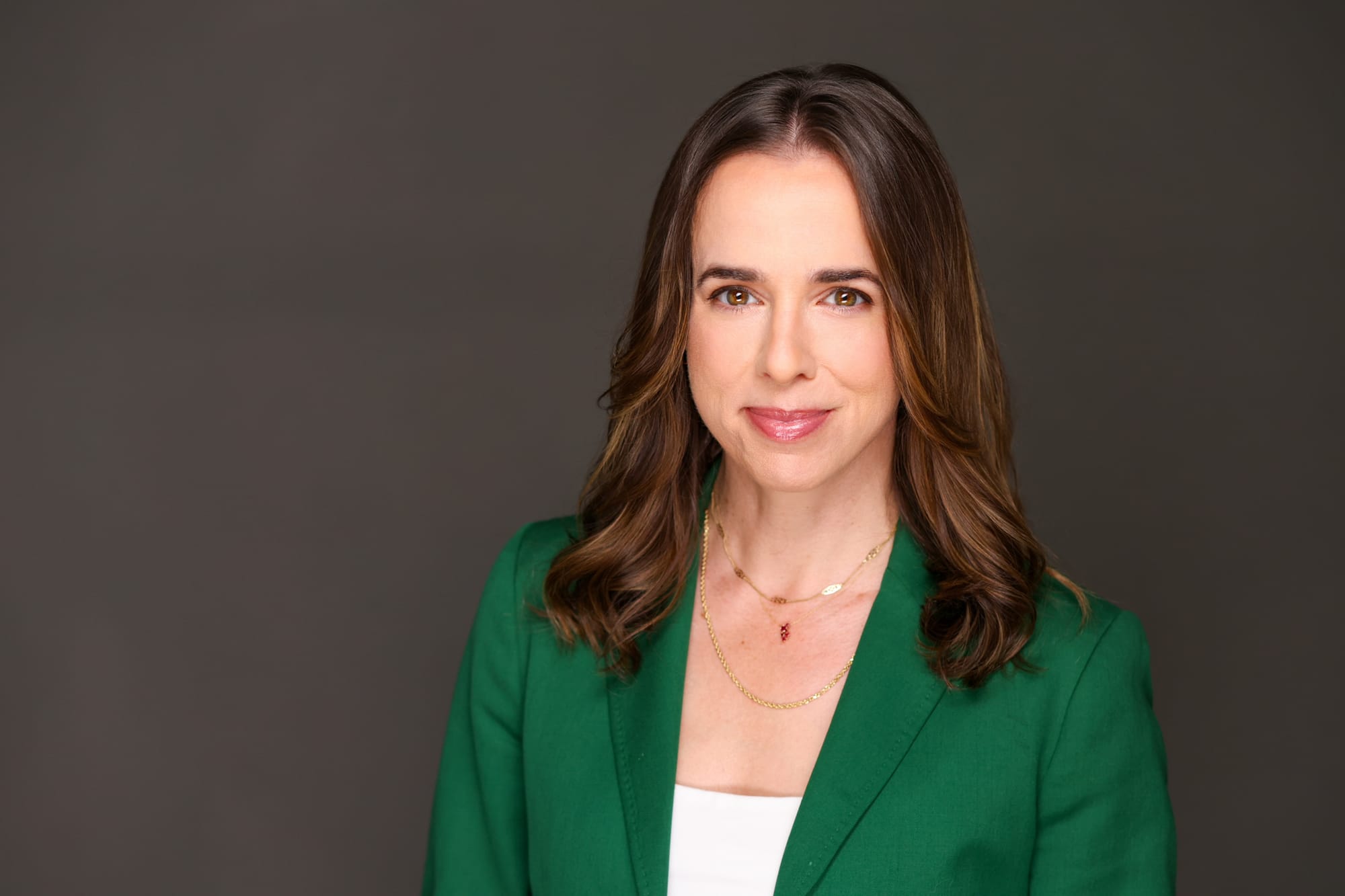
Kathryn Judge
Kathryn Judge's research focuses on banking, central banking, and regulatory design. Her work has won accolades from academic peers, industry and others. Judge currently serves as chair of the Research Committee of the European Corporate Governance Institute, in addition to serving on its Working Paper Series Editorial Board, and co-Chair of the Academic Advisory Board to Better Markets. She has previously served as vice dean for intellectual life at Columbia Law School, as an editor of the Journal of Financial Regulation and as a member of the Financial Research Advisory Committee (FRAC) to the Office of Financial Regulation. Prior to joining Columbia, Judge clerked for Richard Posner on the Seventh Circuit Court of Appeals and Justice Stephen Breyer on the U.S. Supreme Court.

Santi Ruiz
Santi Ruiz is an Editorial Lead at Anthropic. He previously served as the Senior Editor at the Institute for Progress (IFP) and is the author and host of the Statecraft newsletter and podcast. Santi previously served as the Executive Director of Interact, a global community of technologists, and covered science and tech for the Washington Free Beacon.

Michelle Evermore
Michelle Evermore's work focuses on innovating and improving our nation’s fractured unemployment insurance system. Michele comes to NASI as a recent senior fellow at The Century Foundation. Michele also served in the Biden administration as deputy director for policy in the newly formed Office of Unemployment Insurance Modernization in the U.S. Department of Labor. Michele has also worked at the National Employment Law Project, for labor unions, spent a decade working in Congress, and worked in the Obama Administration as well.