Employer costs of health insurance benefits are facing their fastest growth rate since the early 2000s. Increasing healthcare costs are likely to continue to get worse next year.
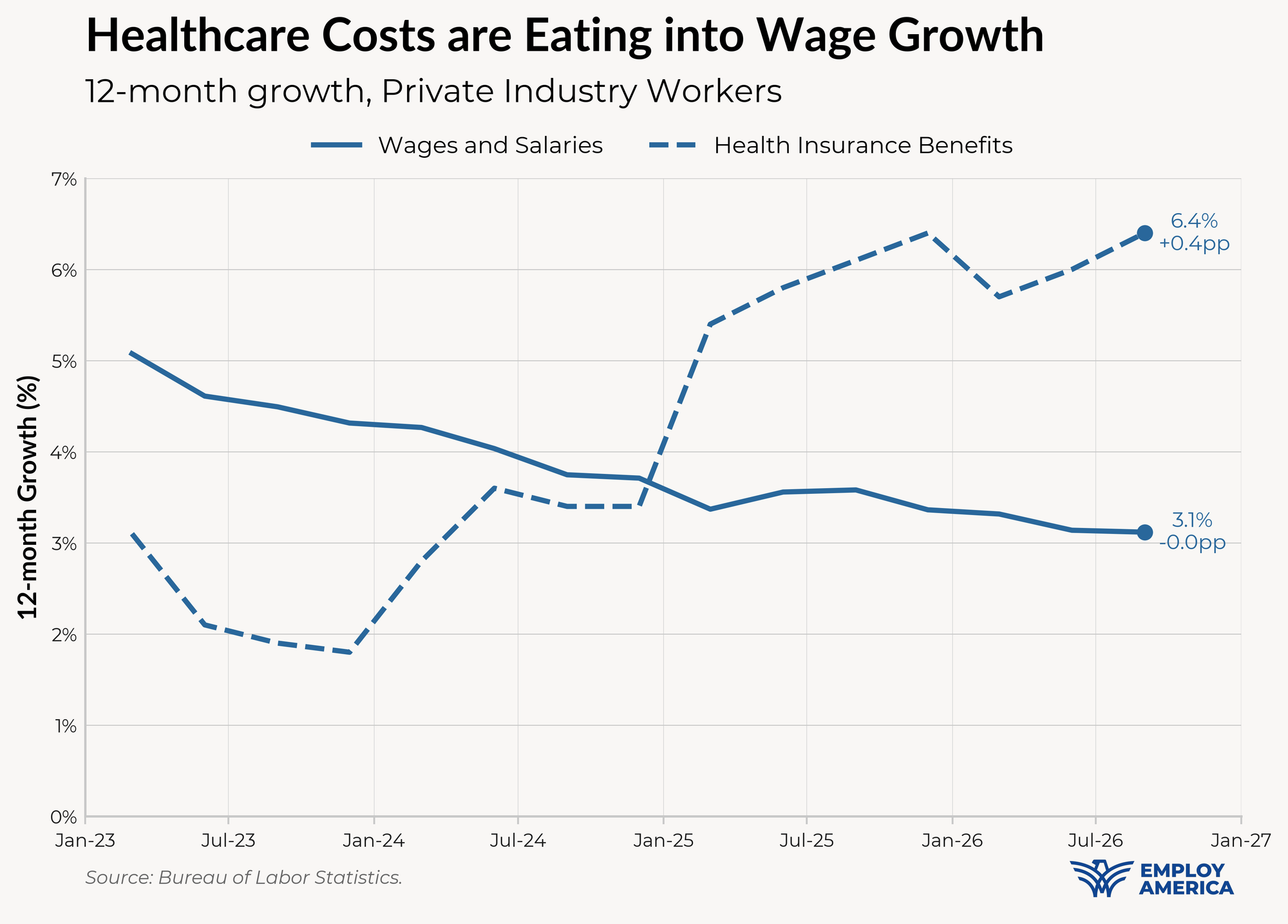
In this morning's Employment Cost Index release, we continue to see healthcare costs crowding out wage growth. While the rate of wage growth has steadily fallen to 3.1%, the employer cost of has increased by 6.4% since twelve months ago. Employer costs of health insurance benefits are facing their fastest growth rate since the early 2000s.
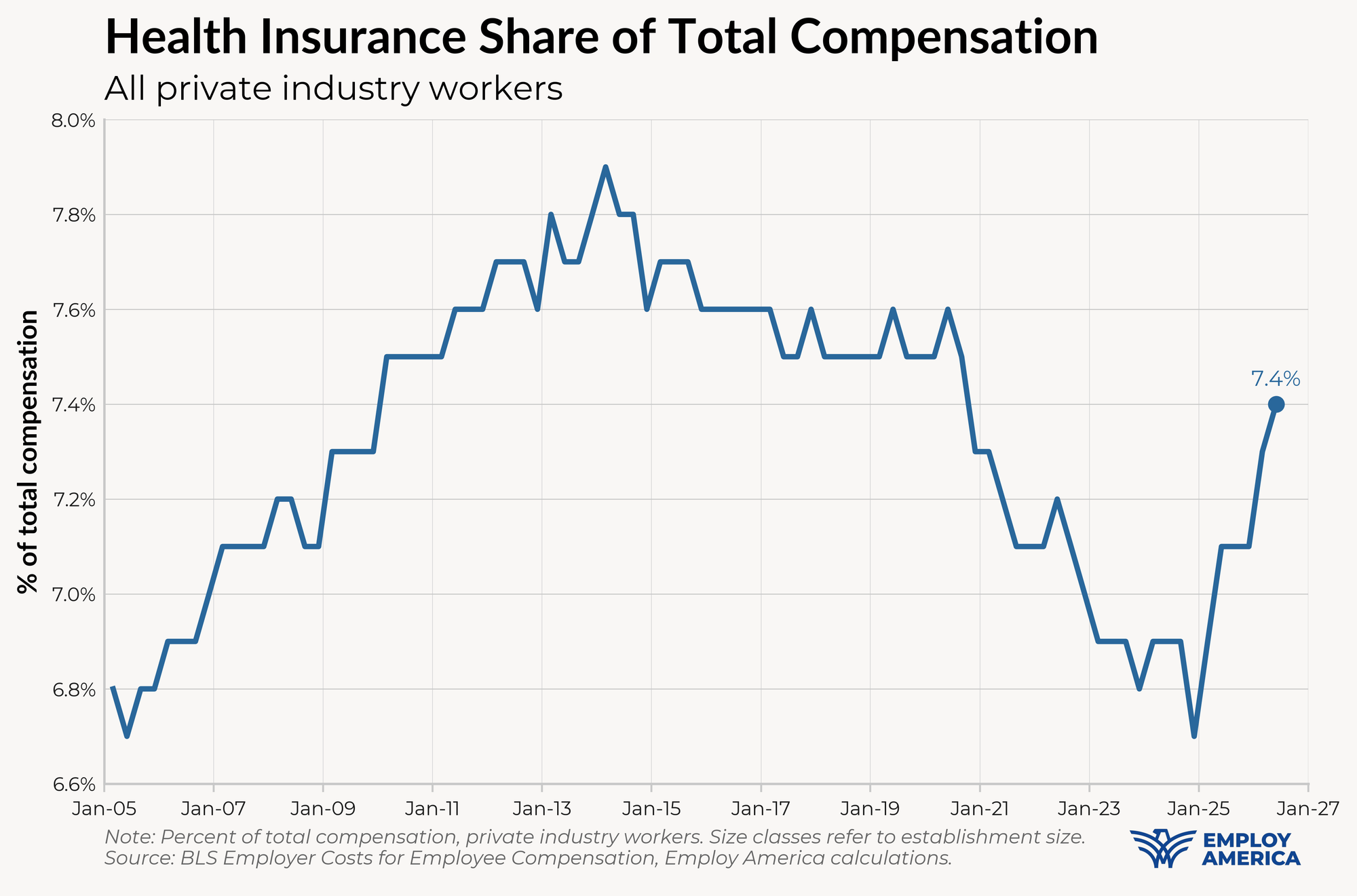
While healthcare costs' share of compensation isn't at the highest level ever, that share is growing at a rapid clip. The health insurance share of total compensation has increased from 6.7% to 7.4% in just one year.
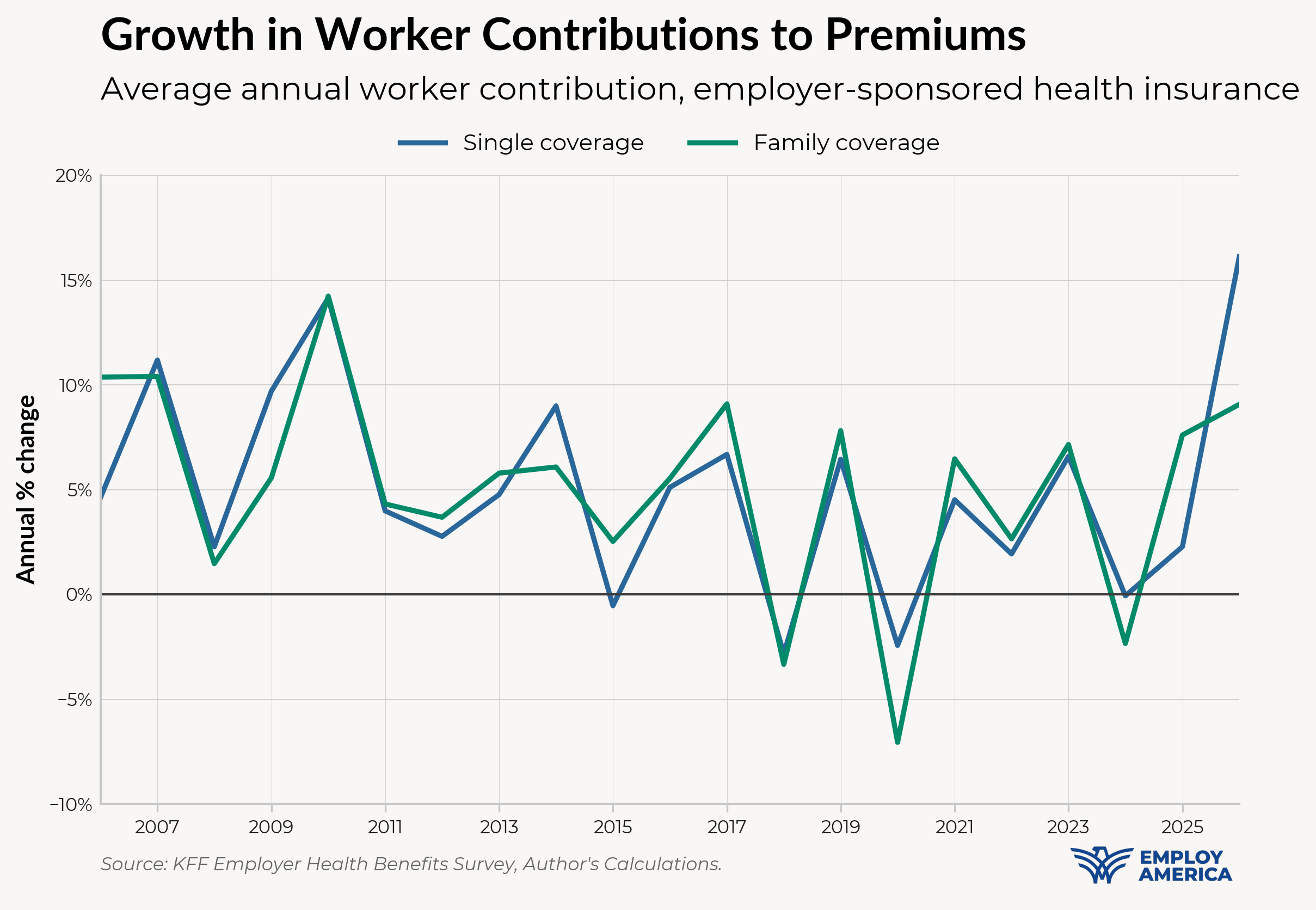
That's just the employer-side of healthcare costs, and it understates the effect on take-home pay. We also got the Kaiser Family Foundation's Employer Health Benefits Survey for 2026 last week, and it shows average employee contributions to premiums growing at rates not seen since the early 2000s. Average worker contributions to premiums have increased by even more than employer contributions. Single coverage premiums have increased by over 15%.
Note: the KFF Employer Health Benefits Survey took place in 2026Q1 and Q2. Unlike the ECI, the KFF data is not composition-adjusted.
Premiums are only part of the story. In response to rising healthcare costs, employers have responded by increasing employee cost-sharing. The average annual deductible for single coverage increased by 6.6%, from $1,663 to $1,733 over the last year.
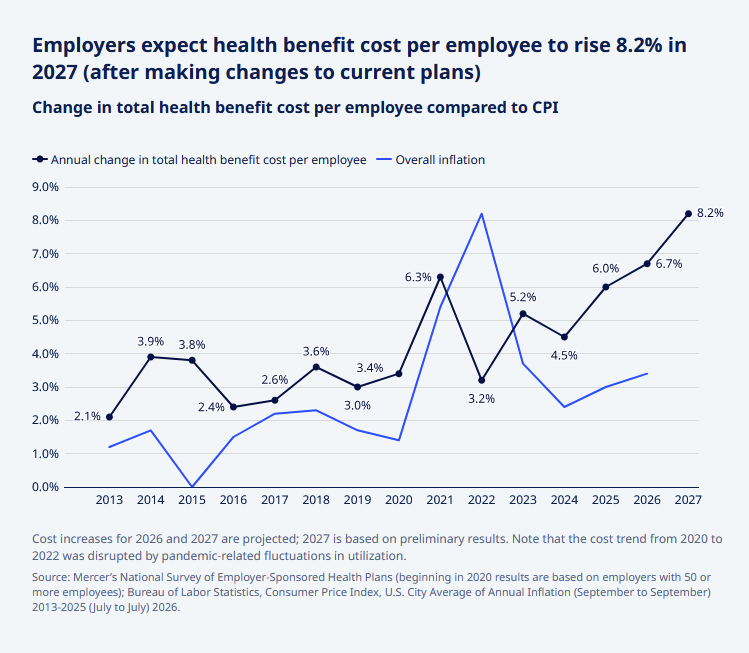
Increasing healthcare costs are likely to continue to get worse next year. According to Mercer's annual survey of employers, total healthcare benefit costs are going to rise even faster in 2027.
As in 2026, the increase in premiums in 2027 is likely to understate the impact of healthcare costs on the discretionary income of workers. According to Mercer, employers are planning on "including plan design changes like higher deductibles that can increase members’ out-of-pocket costs."
There are a number of reasons why healthcare costs are increasing so quickly. Some of these cost increases represent a genuine increase in consumption of higher-quality healthcare, such as a greater use of advanced treatments and increasing GLP-1 utilization.
However, other reasons for the increase simply represent increasing costs for the same care. One of those reasons is the increasing consolidation of care, especially in hospitals where prices are generally higher than in non-hospital facilities. Another interesting reason that Mercer cites for increasing healthcare costs is the increasing use of AI by providers to submit more and higher-payment claims to insurers. If providers are simply citing higher-cost diagnoses for the same patients and procedures, this is unlikely to be picked up by the Producer Price Indices (and by extension, the PCE Price Index) as inflation, since services for different diagnoses are considered different items. And if that cost increase isn't measured as inflation, it gets measured as real output and real productivity growth.
In any case, the overall effect of this cost growth will be a headwind against hiring and consumption in other areas of the economy. As we covered in our study of the importance of healthcare to the success of the 1990s, employer healthcare costs serve as a sort of "head tax" on employment and hiring, especially for middle-income workers for whom health insurance makes up a relatively large portion of compensation. The increase in premiums, deductibles, and co-pays only further diminishes the discretionary income available to workers to spend in other areas.
The link has been copied!
Your link has expired. Please request a new one.
Your link has expired. Please request a new one.
Your link has expired. Please request a new one.
Great! You've successfully signed up.
Great! You've successfully signed up.
Welcome back! You've successfully signed in.
Success! You now have access to additional content.