With the labor market in a stable place, the FOMC is going into the September meeting with one question: is rate policy sufficiently restrictive to bring inflation down?
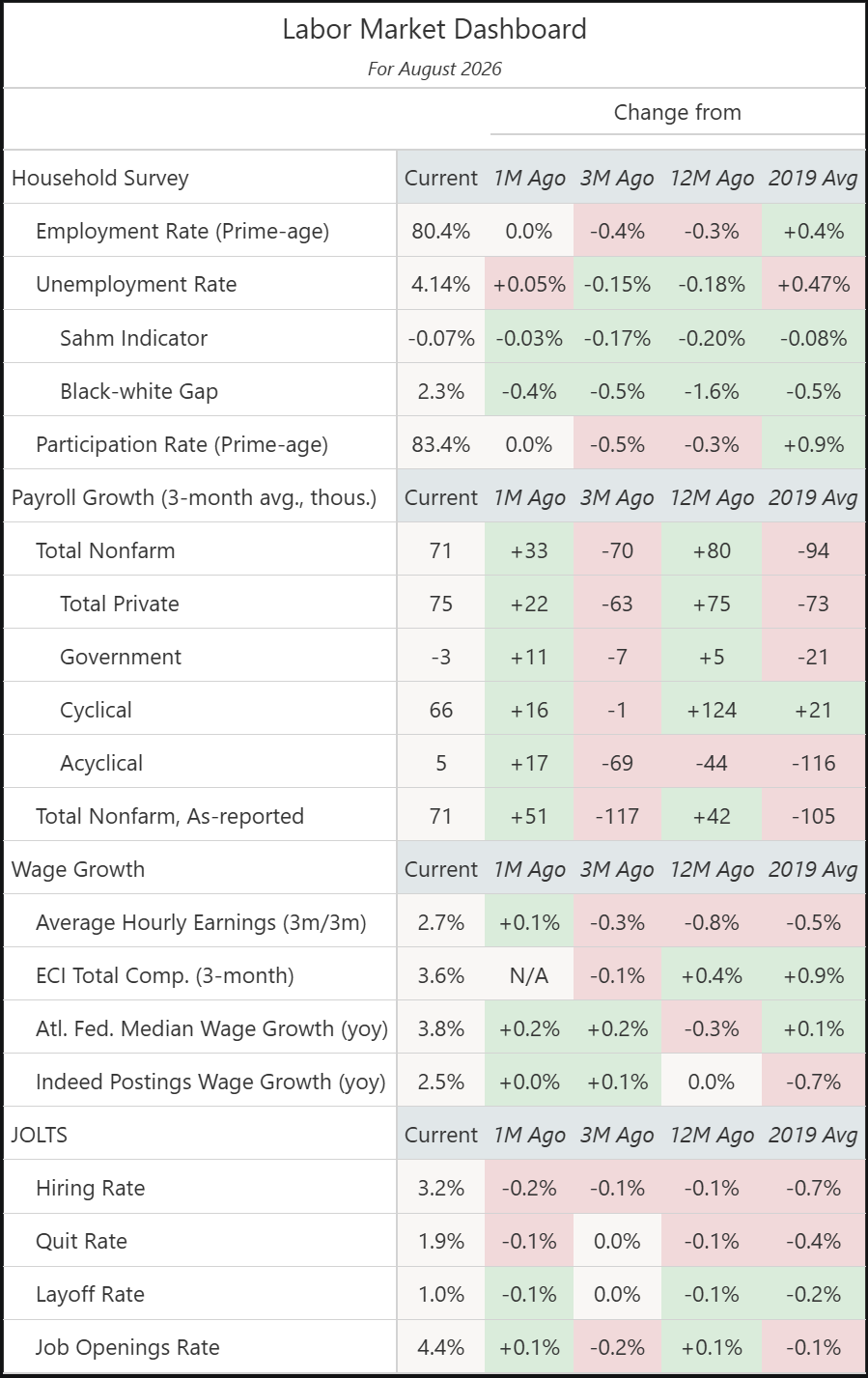
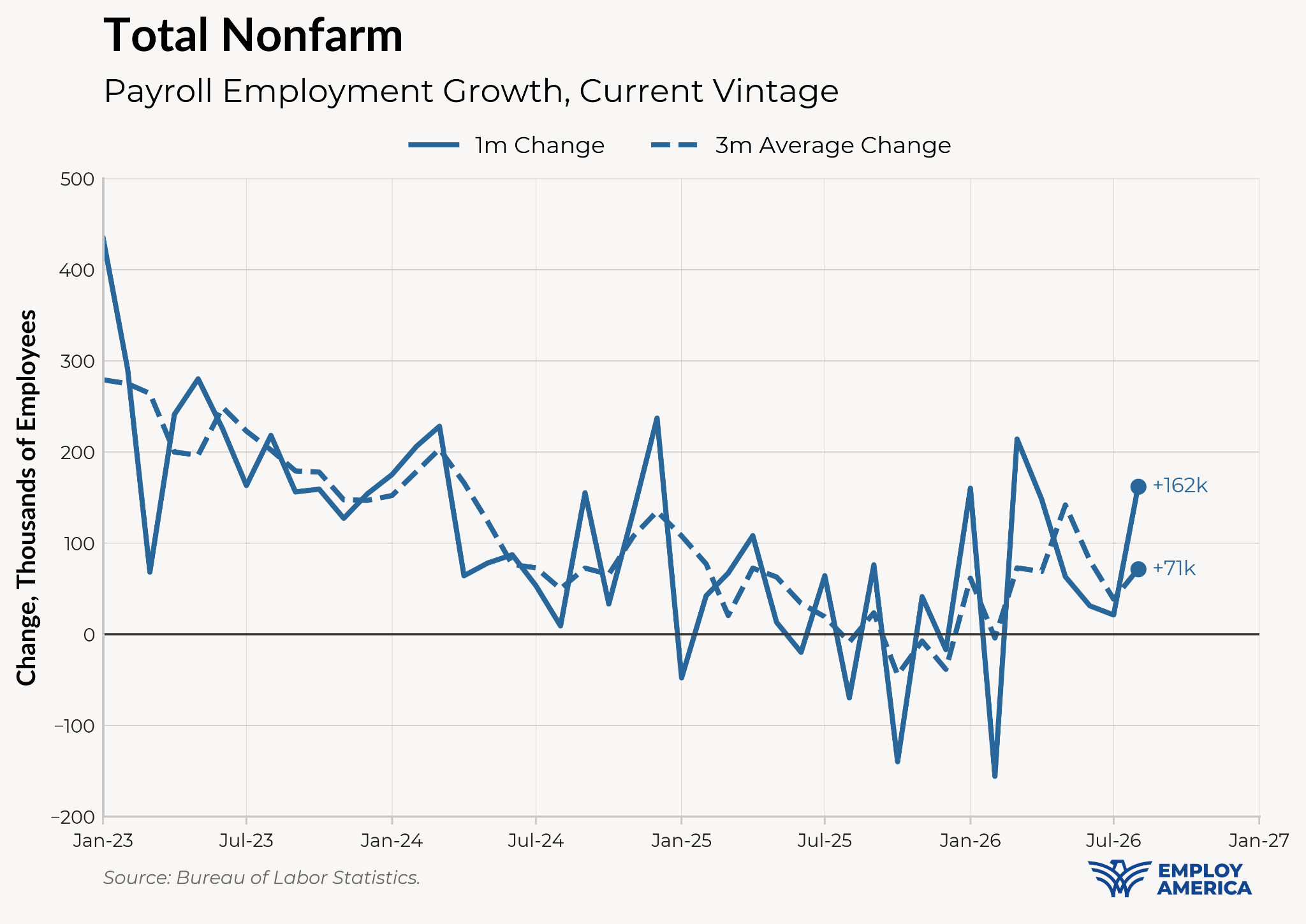
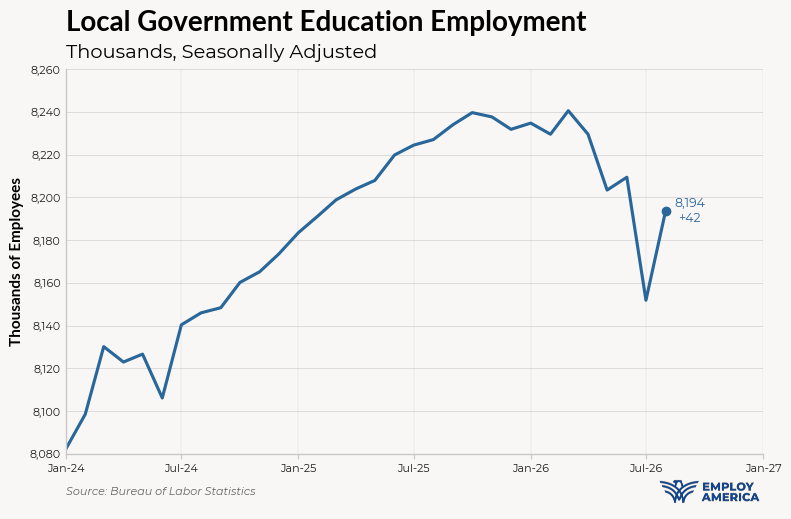
The unemployment rate rose by 0.05pp in August, while non-farm payrolls added a sizable 162,000 jobs. June and July payrolls were revised upwards, including a +44,000 revision to July, erasing its initial negative print. The strength in payrolls was primarily driven by food services employment as well as a bounceback in local government education employment, which had an unusual drop in July.
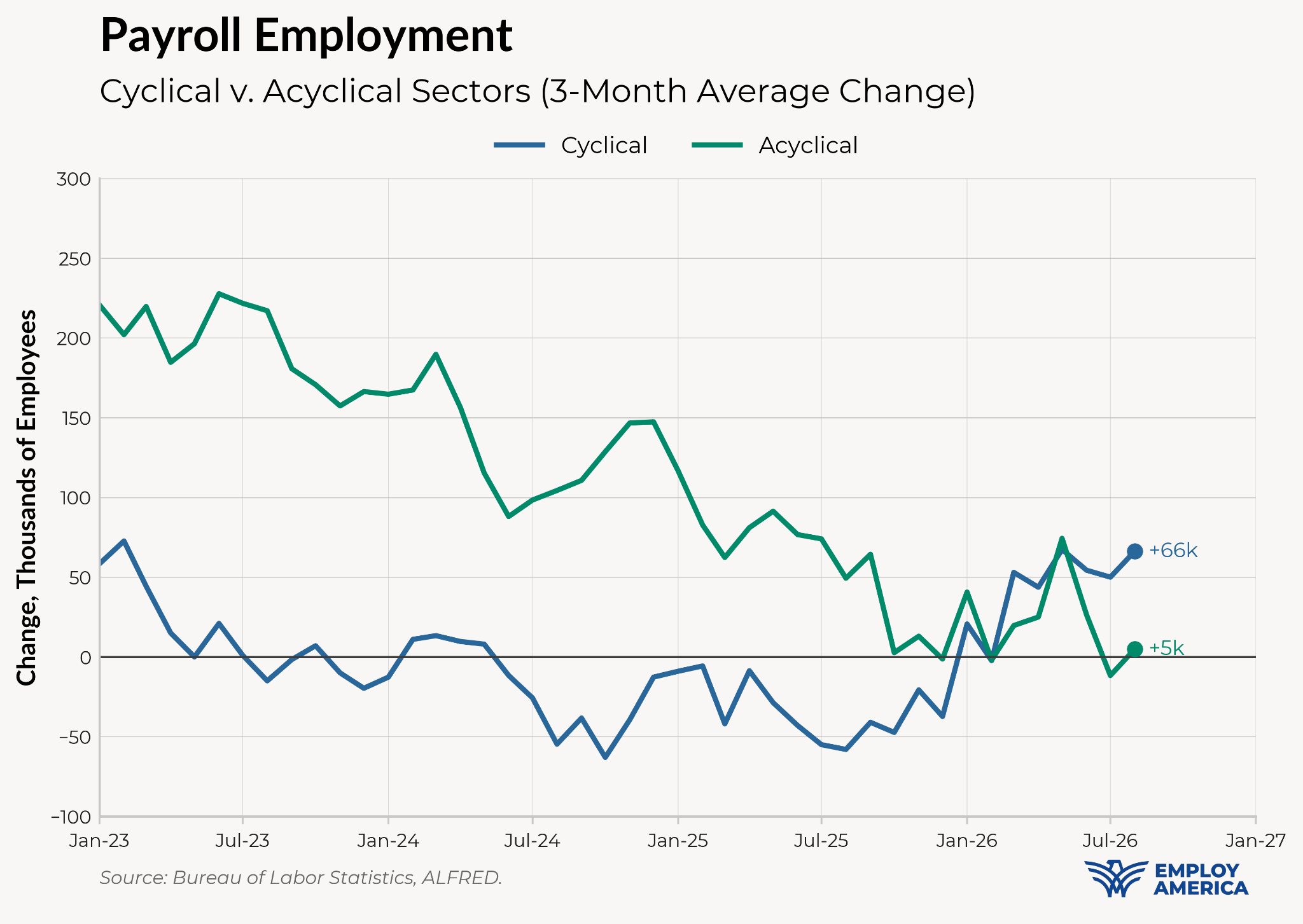
Overall, this is another month where the labor market is showing stability without an obvious inflationary impulse. The decline in the unemployment rate appears durable, short-term unemployment (a timely proxy for layoffs) have been plummeting, part-time employment for economic reasons has stopped climbing, and the black-white unemployment gap is back down to its historically low level. Payroll employment has picked up, and it’s no longer just healthcare; jobs growth has rotated away from being driven by acyclical industries to cyclical industries. But: real wage growth is negative, and gross labor income growth is where it was in the 2010s.
On the margin, this is a hawkish report. If the Fed hikes, they won’t be doing so into negative payrolls prints. But, as we noted last month, that probably wasn’t a huge barrier for the hawks on the Committee. It’s all going to come down to the inflation data we receive in the coming weeks.
Source: Bureau of Labor Statistics, Author’s Calculations. Red indicates weaker labor market development; green indicates stronger.
A steady labor market
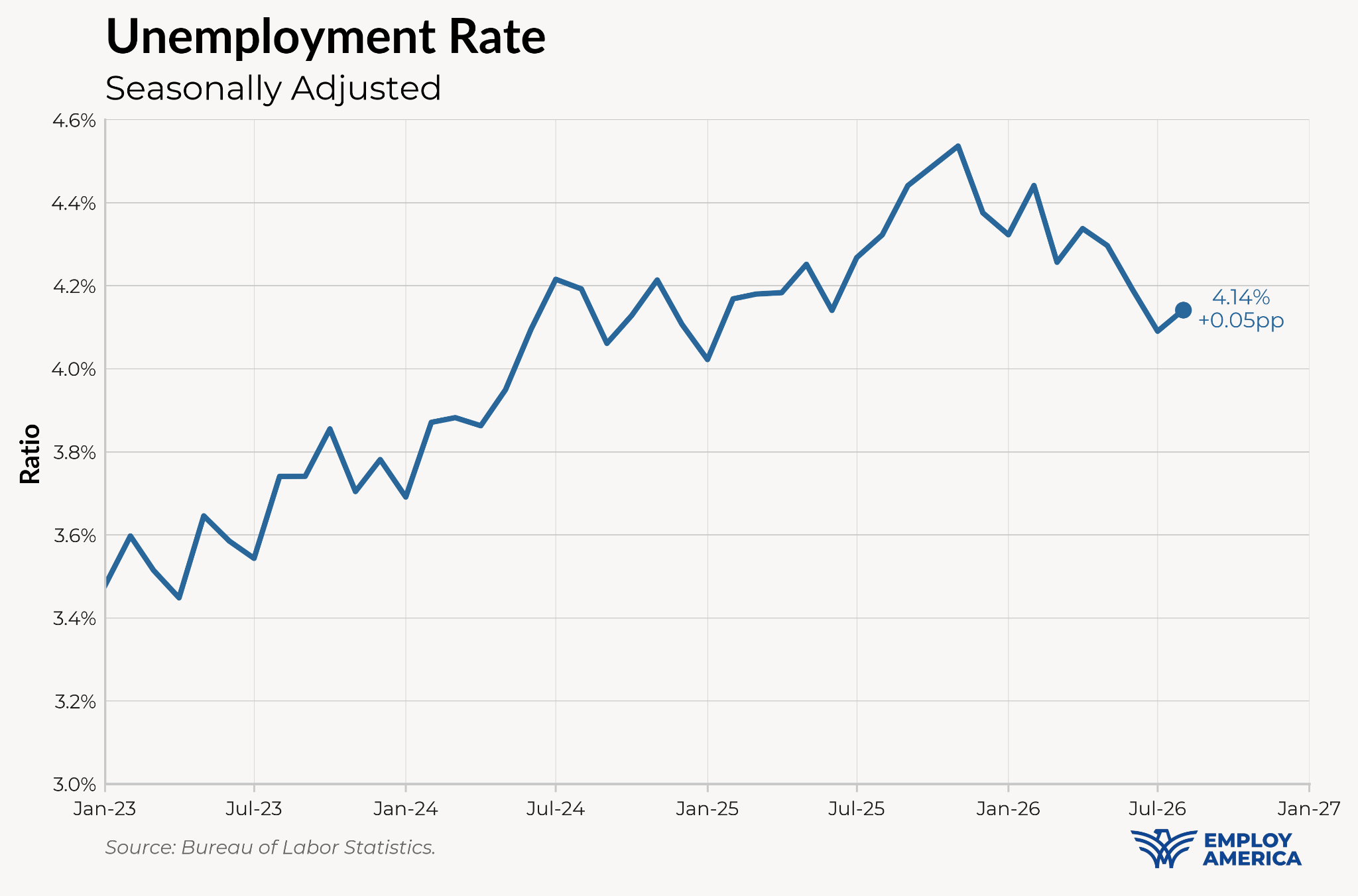
Despite a slight increase in August, the decline in the unemployment we’ve seen over the past year has proven to be durable. The unemployment rate is now comfortably around where it was before the Fed implemented insurance hikes in 2025.
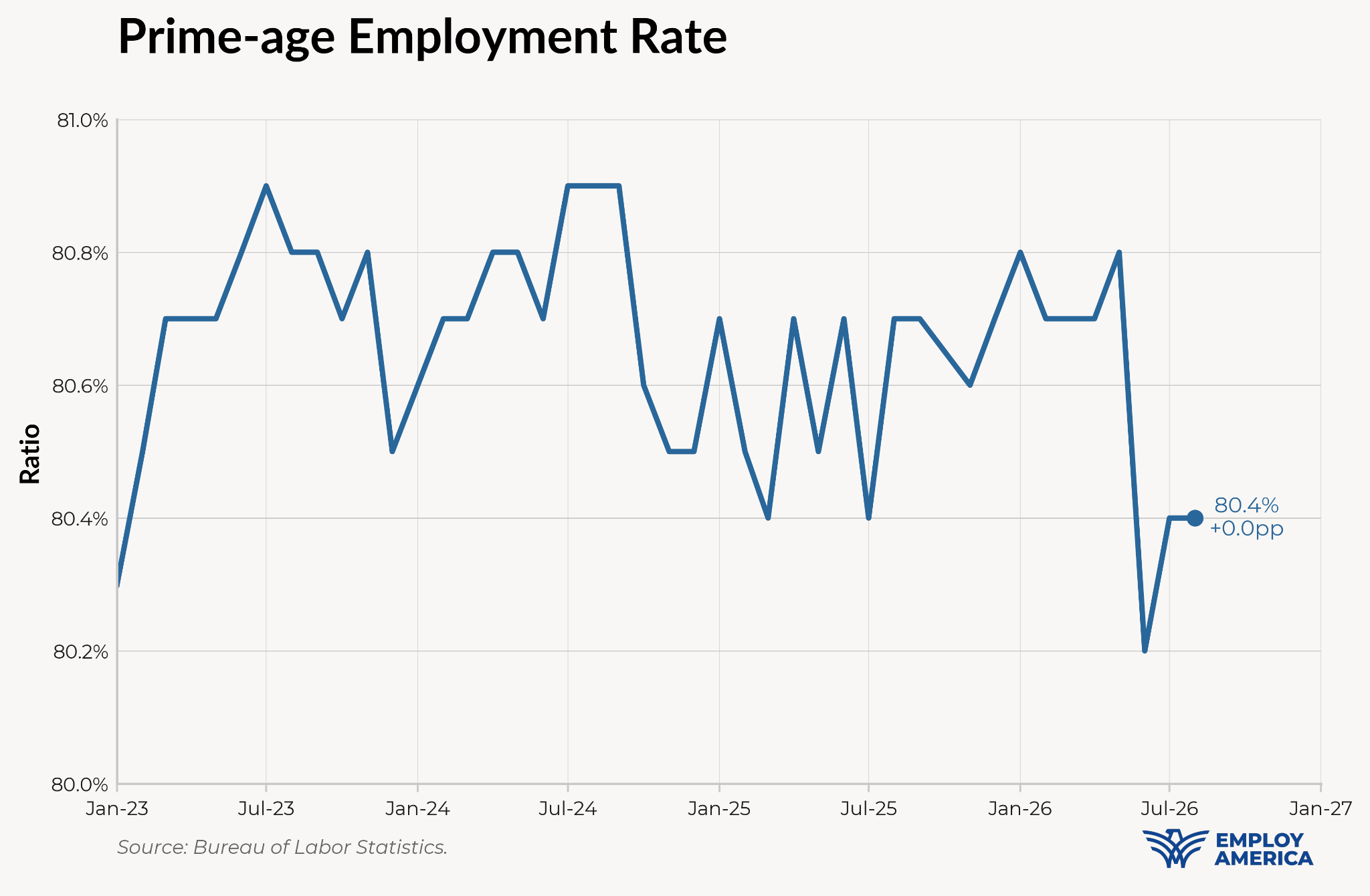
The prime-age employment rate held steady this month. The steep drop in employment and participation in June still hasn’t gone away. As we noted that month, that does appear to be a quirk where a new CPS rotation group entered with an unusually low participation rate. The employment and participation drop is likely to stay with us for at least another month until that group leaves the survey rotation, at which point it would not be surprising to see a sharp increase in participation and employment.
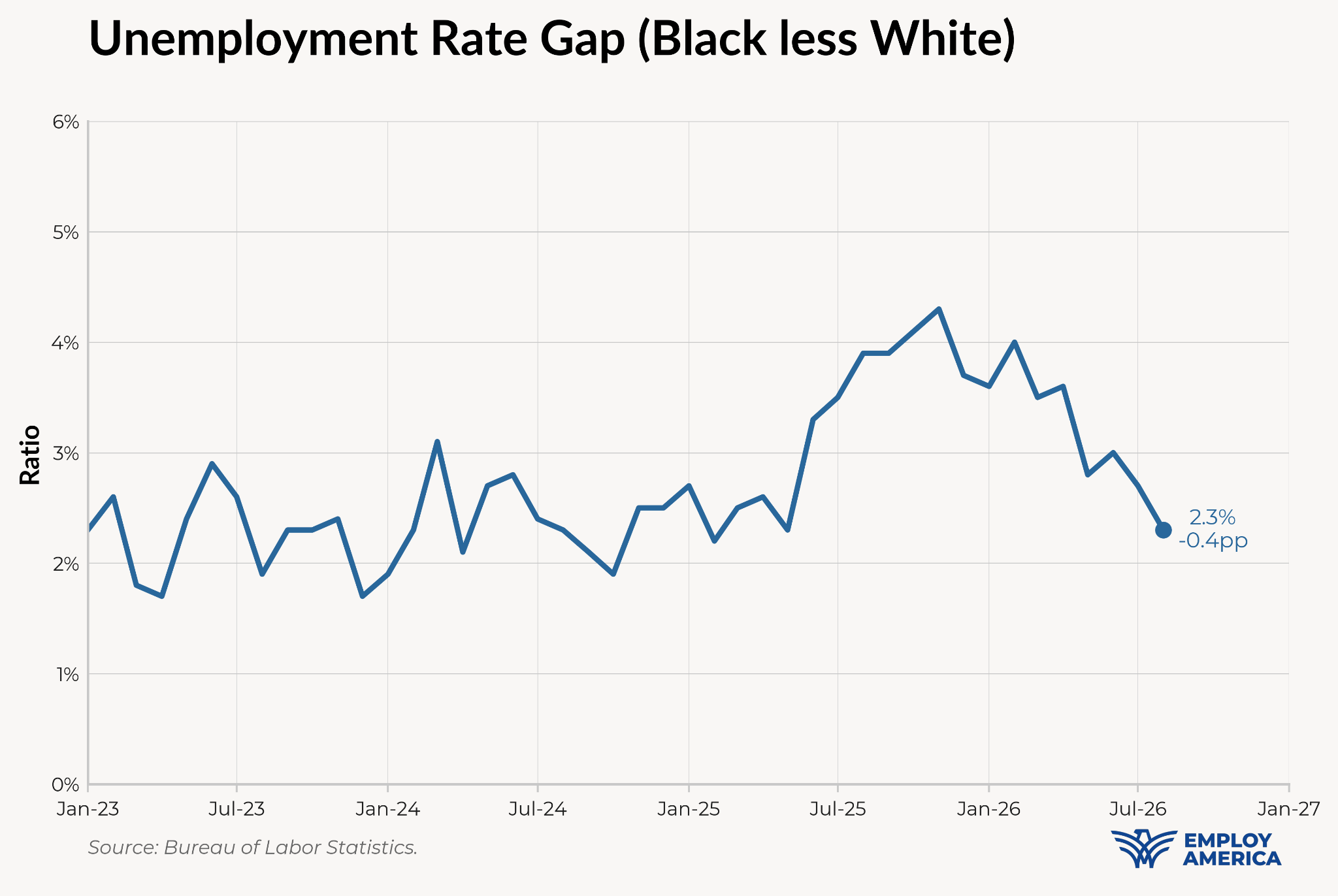
One consequence of the rapid recovery in the labor market was that the unemployment gap between black and white Americans fell to historic lows. In late 2025, we saw that gap widen again as black unemployment rates rose, perhaps due to government payroll cuts. But over the past year, black unemployment rates have once again fell to 2019 levels, and the black-white unemployment rate gap is back down to historic lows.
August’s nonfarm payrolls growth of 162,000 comes in way above consensus. After the positive revisions to June and July, three-month payrolls growth sits at +71,000 jobs per month, comfortably above most estimates of breakeven payroll growth.
About a quarter of this month’s growth comes from local government employment in education. Since education employment experiences large seasonal swings during this time of the year, the seasonal adjustment process can sometimes be volatile. That appears to have happened both last month and this month, with the sharp fall in employment last month almost completely reversed this month.
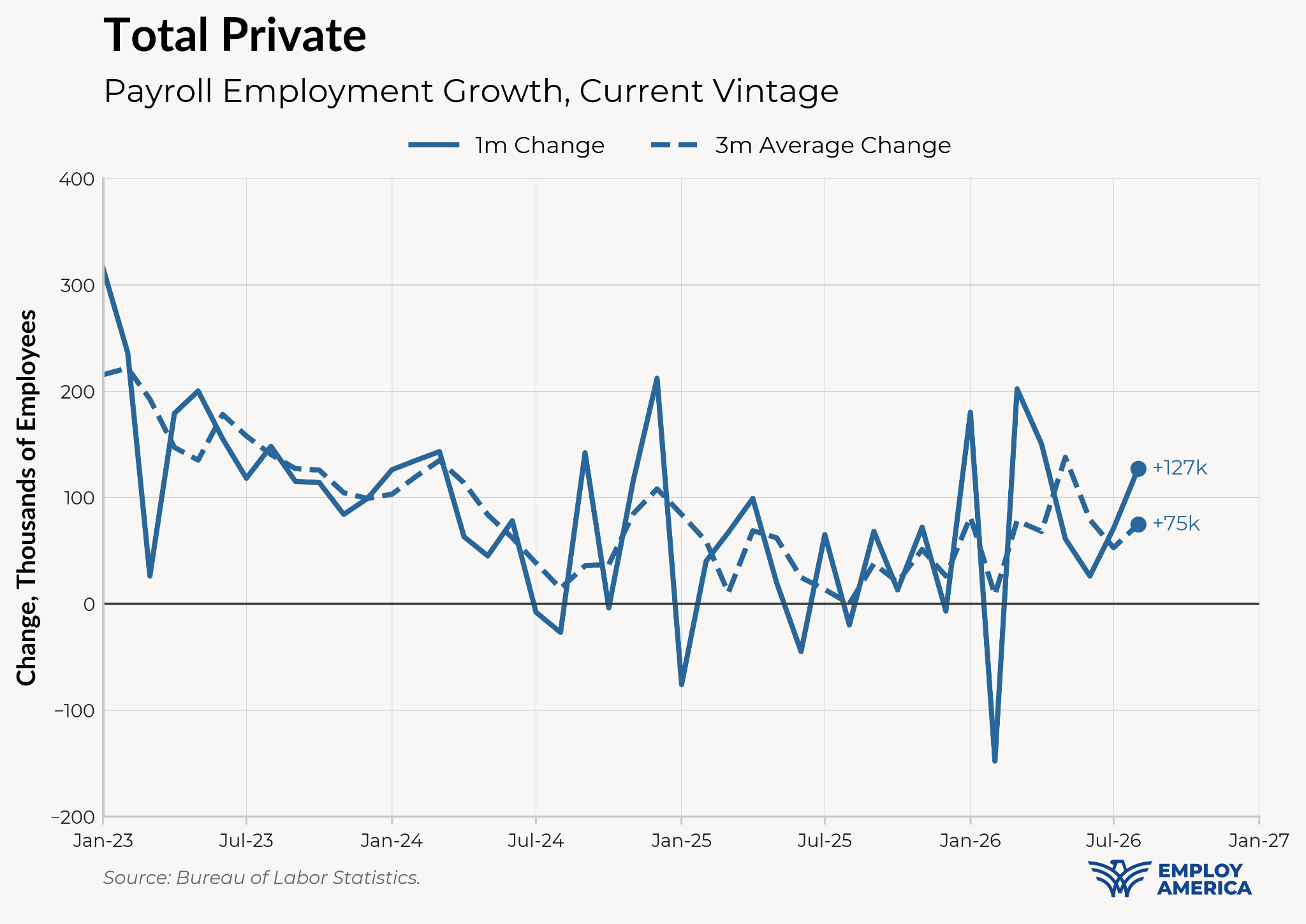
Taking that into account, July’s total payrolls growth somewhat understates labor market strength, and August’s overstates it. A better read on the situation is private payrolls growth, which shows a steady upwards trend since last year.
The narrative on jobs growth composition has also changed drastically over the past year. In 2025, the concern was that jobs growth was entirely driven by “acyclical” industries such as education and healthcare, and that cyclical industries weren’t adding any jobs (or even losing jobs). In 2026, that has totally flipped: jobs growth in acyclical industries has slowed to near-zero, and cyclical jobs growth has picked up.
This Time, it’s Inflation over Labor for the Fed
With the labor market in a stable place, the FOMC is going into the September meeting with one question: is rate policy sufficiently restrictive to bring inflation down? The labor market data alone won’t push them to hike, the moderates might acquiesce to the hawks if they feel like there isn’t a huge downside to hiking when the unemployment rate is falling. In terms of establishing the Fed (and Warsh’s) “credibility” on inflation, hiking looks like low-hanging fruit.
As the FOMC themselves note, the labor market does not seem to be a source of inflation when employment rates are steady and wage growth is falling, especially if real wage growth is negative. Instead, we have inflationary shocks from tariffs, commodity price shocks, and a generational investment boom that seems to be totally insensitive to rate policy. The problem for the Fed is—what is the theory of how interest rates are supposed to cool inflation this time around?
The link has been copied!
Your link has expired. Please request a new one.
Your link has expired. Please request a new one.
Your link has expired. Please request a new one.
Great! You've successfully signed up.
Great! You've successfully signed up.
Welcome back! You've successfully signed in.
Success! You now have access to additional content.