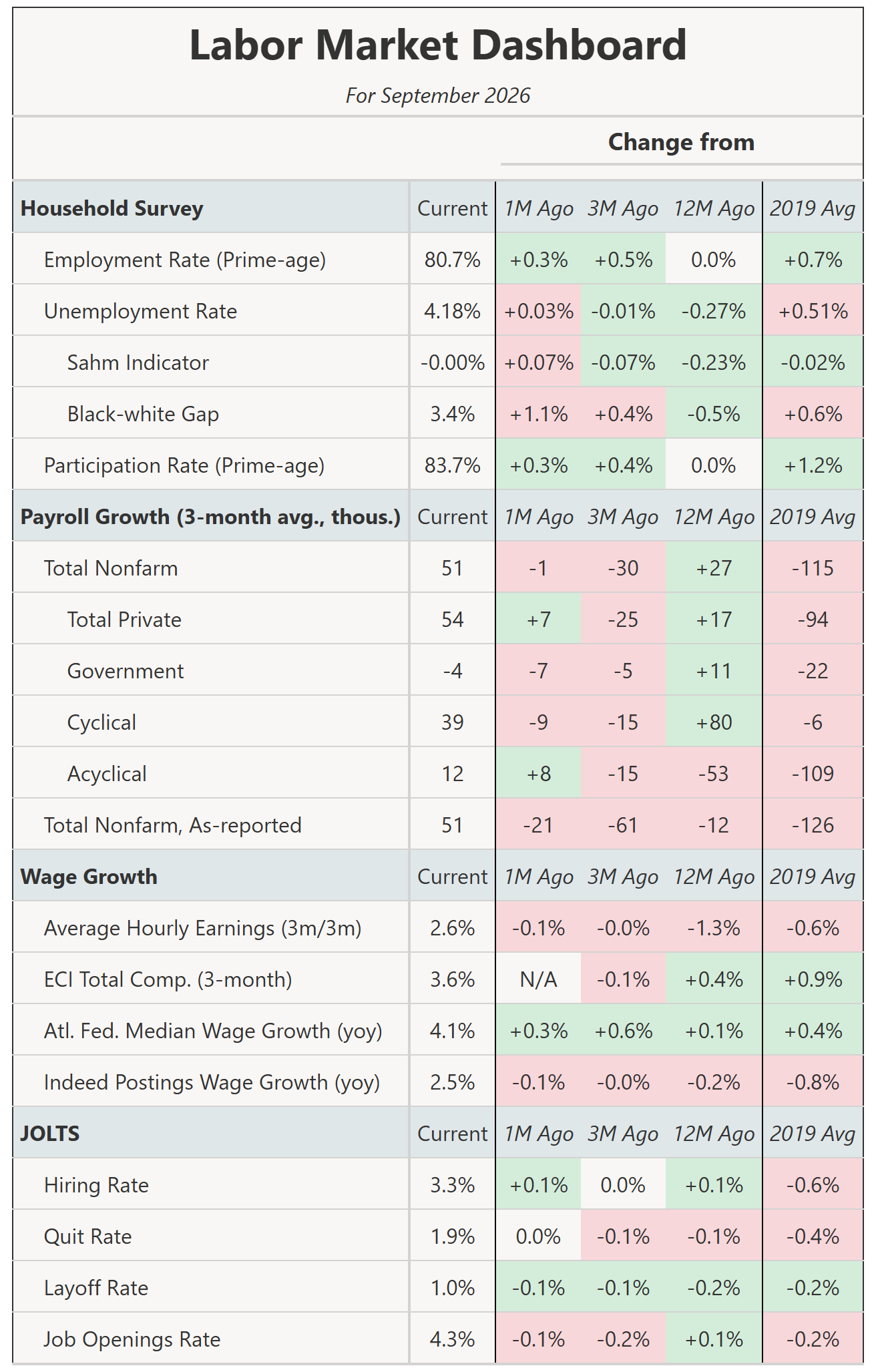
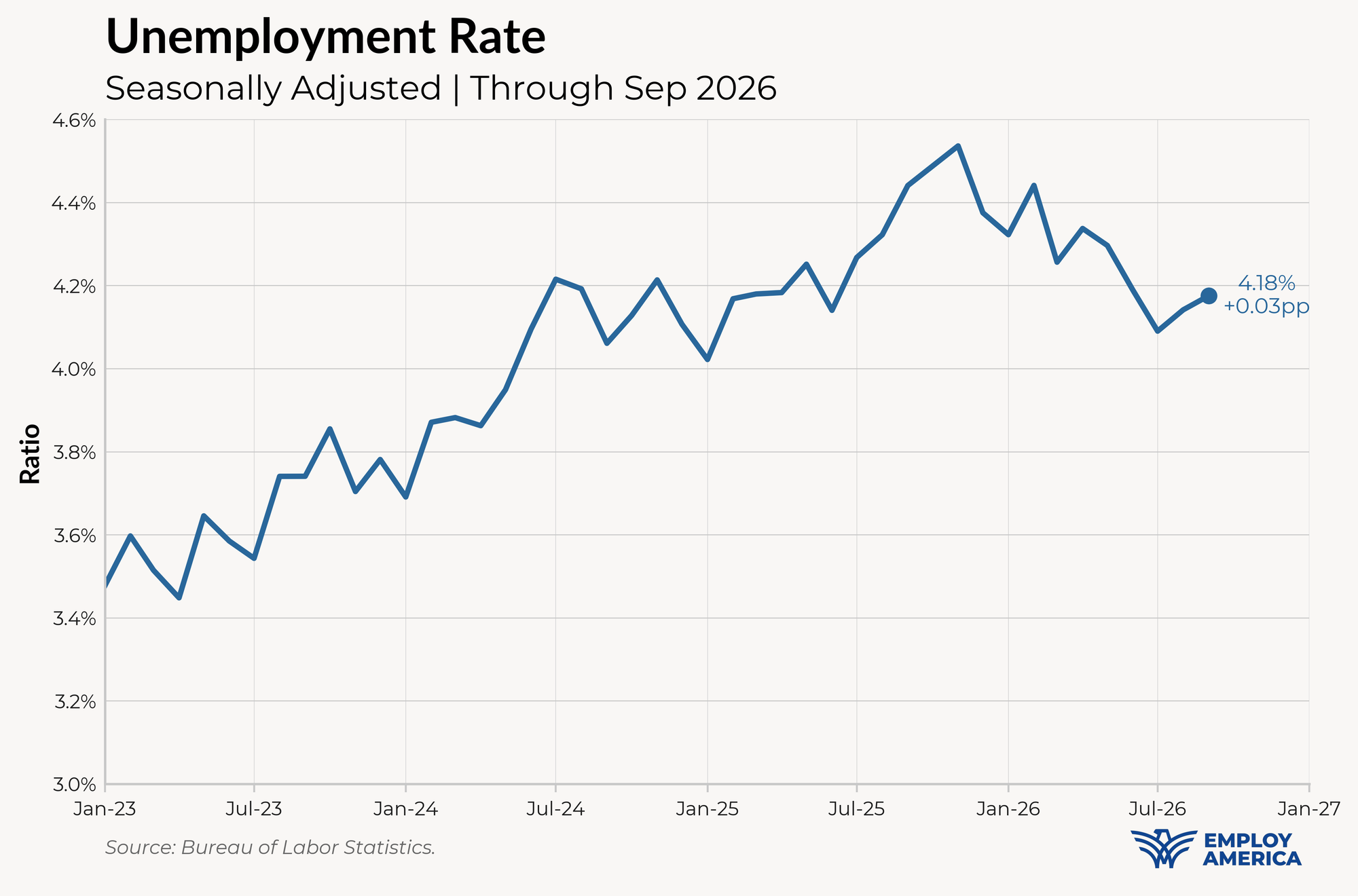
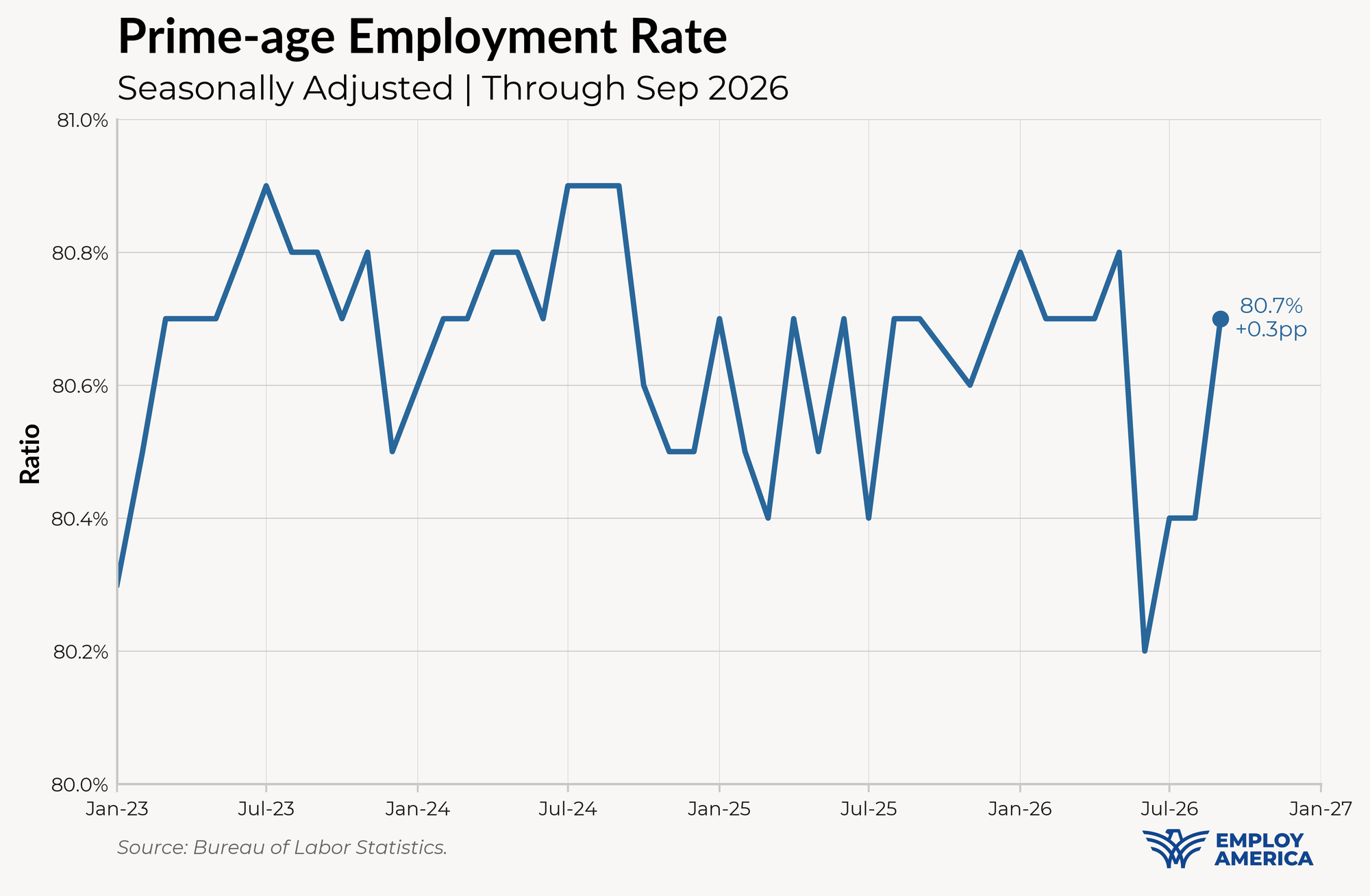
The unemployment rate edged up by 0.03pp to 4.18% in September. Nonfarm payrolls came in below expectations at +29,000; private payrolls came in at +46,000. Prime-age (25-54) employment ticked up by 0.28pp to 80.68% after a sampling quirk led to a sharp drop in June. The sampling quirk will likely reverse next month. July nonfarm payrolls were revised down by 31,000 to -10,000 and August was revised down by 29,000 to 133,000. The August gains were driven by construction, manufacturing, trade, transportation & utilities, healthcare, and leisure & hospitality. Government, temporary help, financial activities, information, and professional & business activities all shed jobs in August.
Overall, we would characterize this report as soft, but not dire: (1) the prime-age employment and unemployment rates are healthy, (2) +29,000 in the context of a low and shifting breakeven rate isn't terrible, and (3) cyclical payroll growth continues to outpace acyclical growth. With that being said, wage growth is cooling. Average hourly earnings rose by just 0.13% in September (3.0% y/y). The labor market is not a source of inflationary pressure.
This jobs report caps off a dovish week after a softer-than-expected core PCE print and dovish Fedspeak from NY Fed President John Williams and Vice Chair Phillip Jefferson. Our base case is for the Fed to hold rates steady at the October 2026 FOMC meeting. MacroSuite subscribers will receive a more thorough update on Monday.
Breakdown
The unemployment rate edged up 0.03pp to 4.18% in September. The median FOMC participant in the latest Summary of Economic Projections expects the unemployment rate to average 4.1% in 4Q2026.
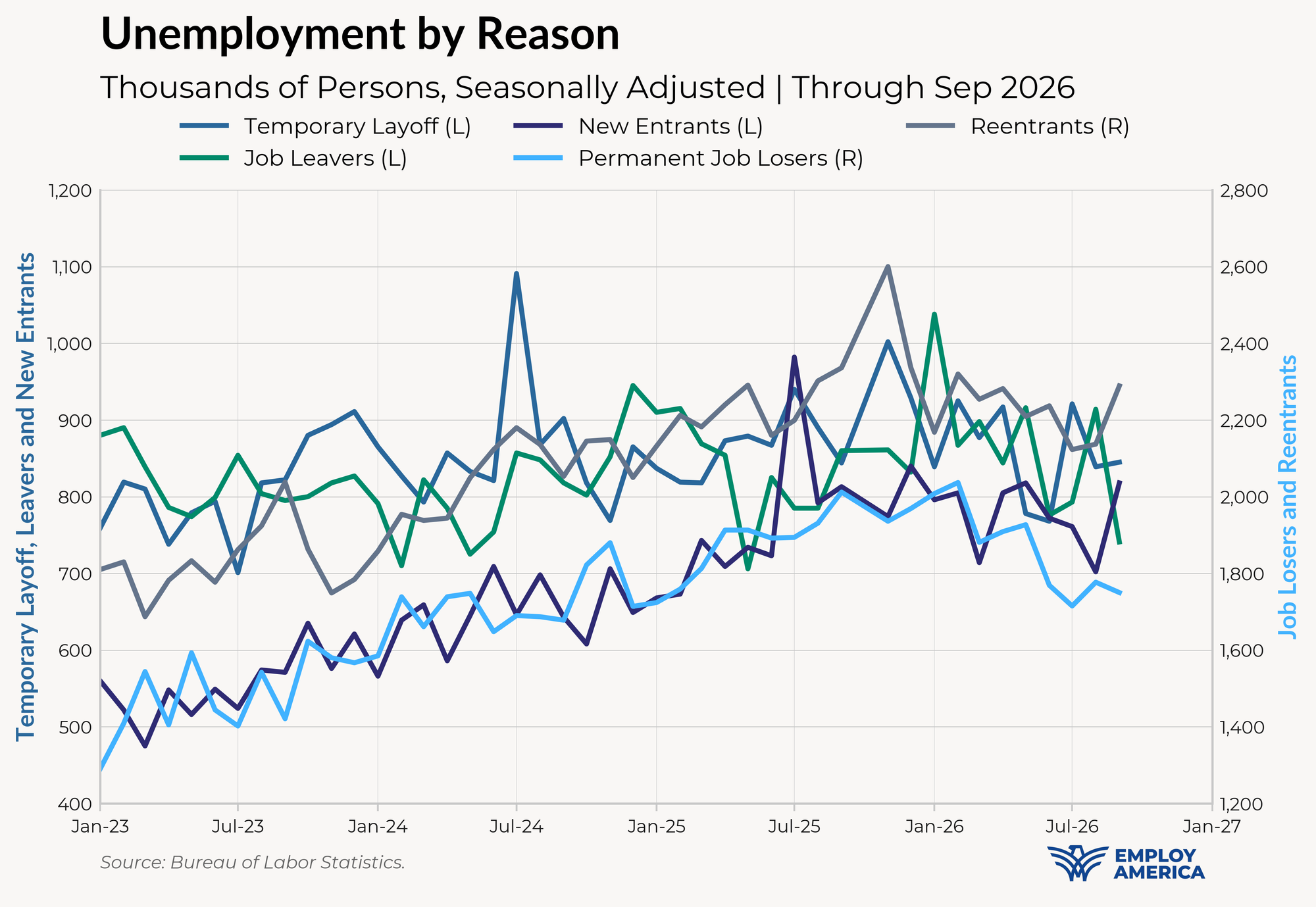
The slight rise in the unemployment rate came from new entrants and re-entrants to the labor force. Unemployed job losers fell by 45,000, and permanent job losers continue to drift down from their late-2025 peak.
One of our preferred metrics, the prime-age employment rate, increased by 0.28pp to 80.68%, despite the low-participation CPS rotation group that entered in June still being in the survey. We wouldn't be surprised to see a spurious pop next month once that group rotates out.
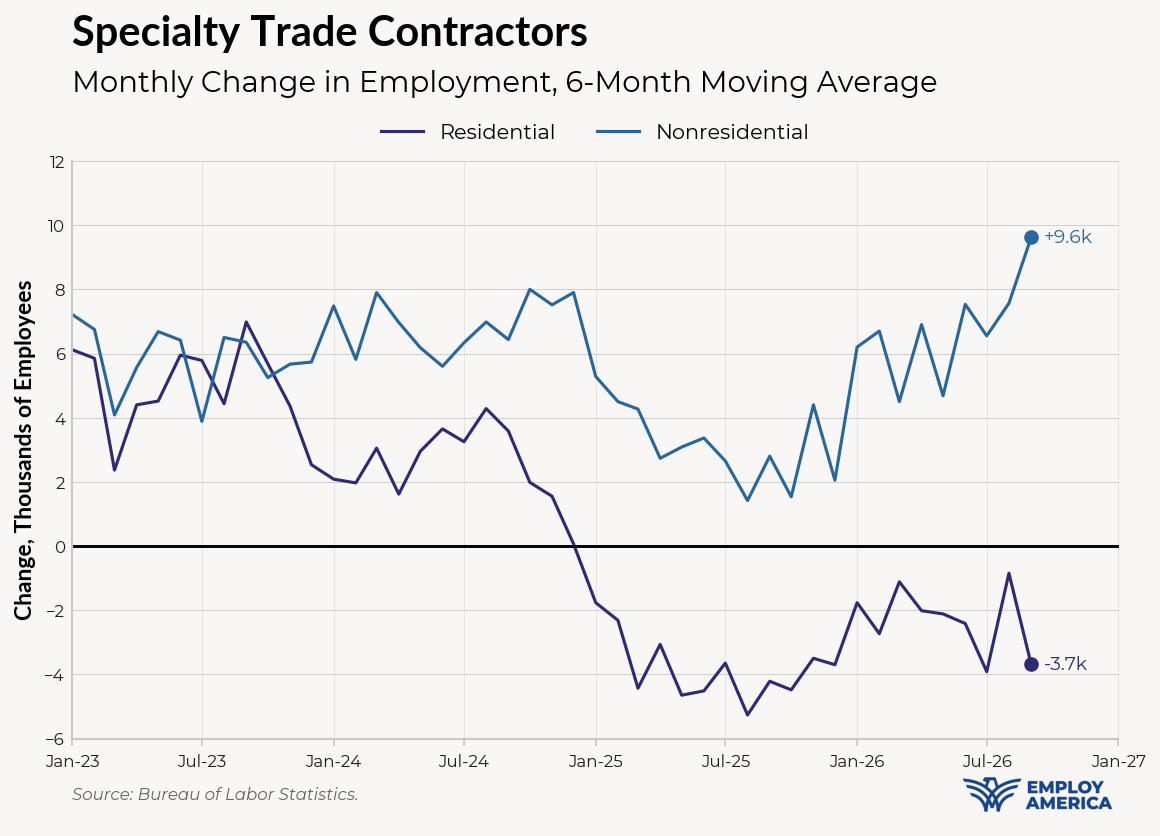
Once again, the strength in construction employment was driven by nonresidential work – not surprising given the state of housing activity and the AI investment boom.
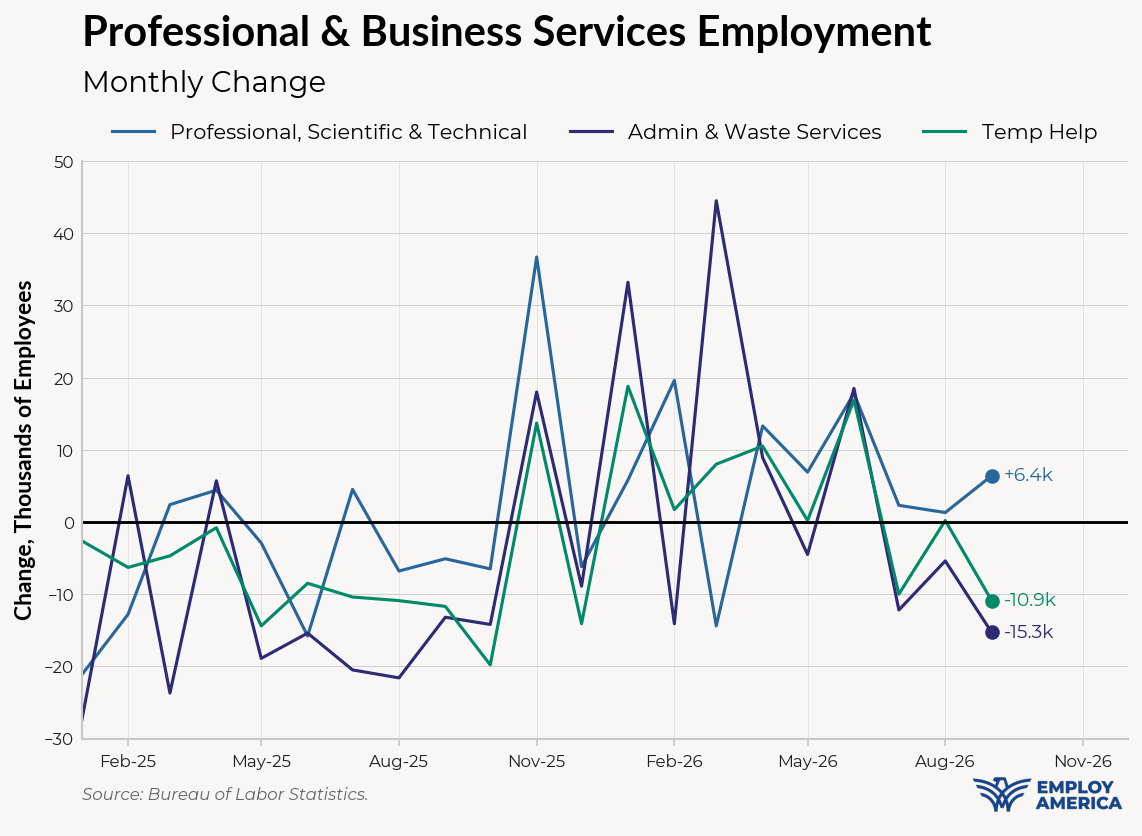
Professional and business services shed 9,000 jobs, but the weakness was concentrated in administrative and support services, particularly temp help, while professional, scientific, and technical services added jobs.
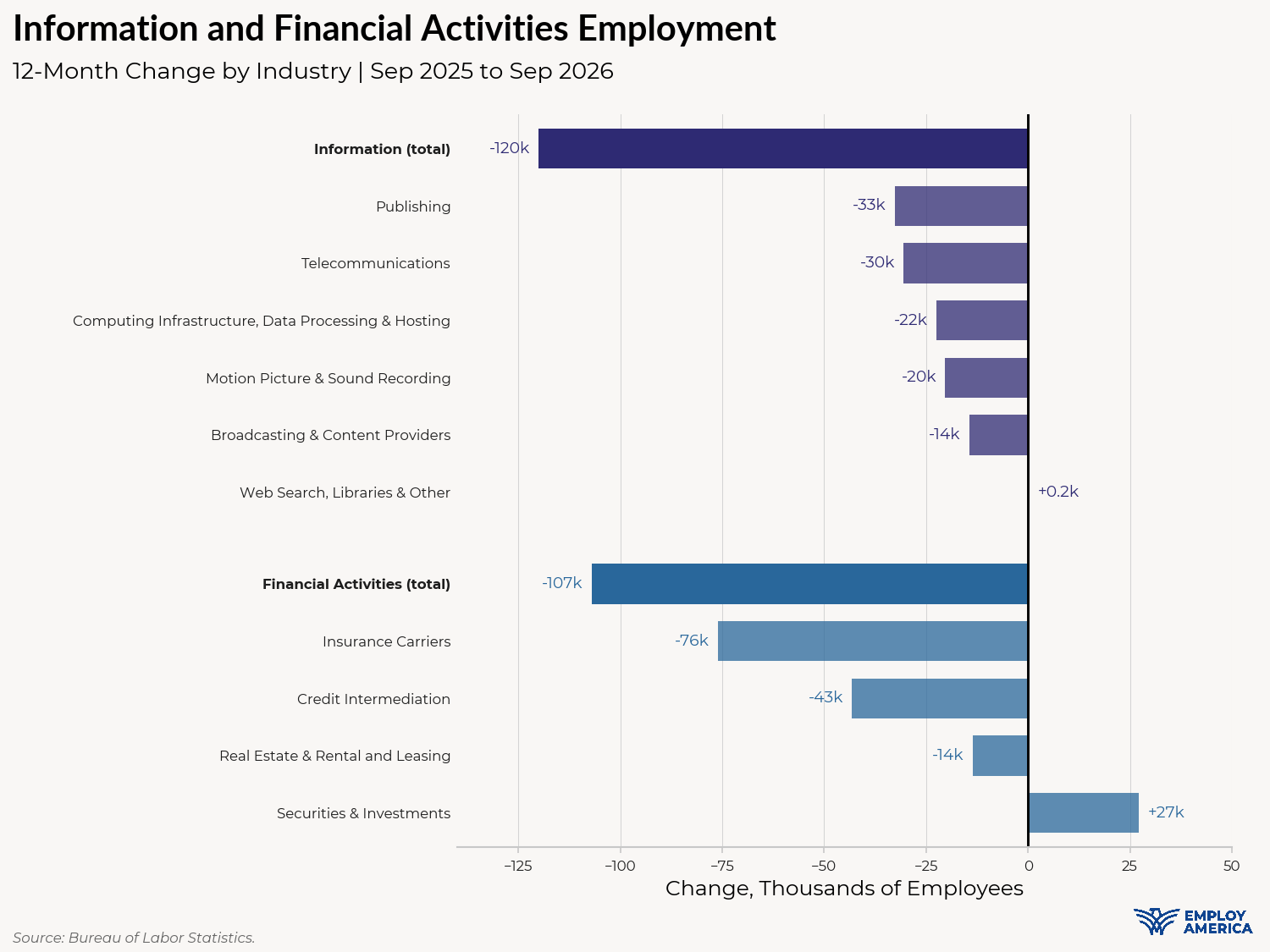
Information and financial activities continue to shed jobs, losing 10,000 and 7,000 in September, respectively. The chart below breaks down where these josses are coming from within the information and financial activities sector on a year-over-year basis.
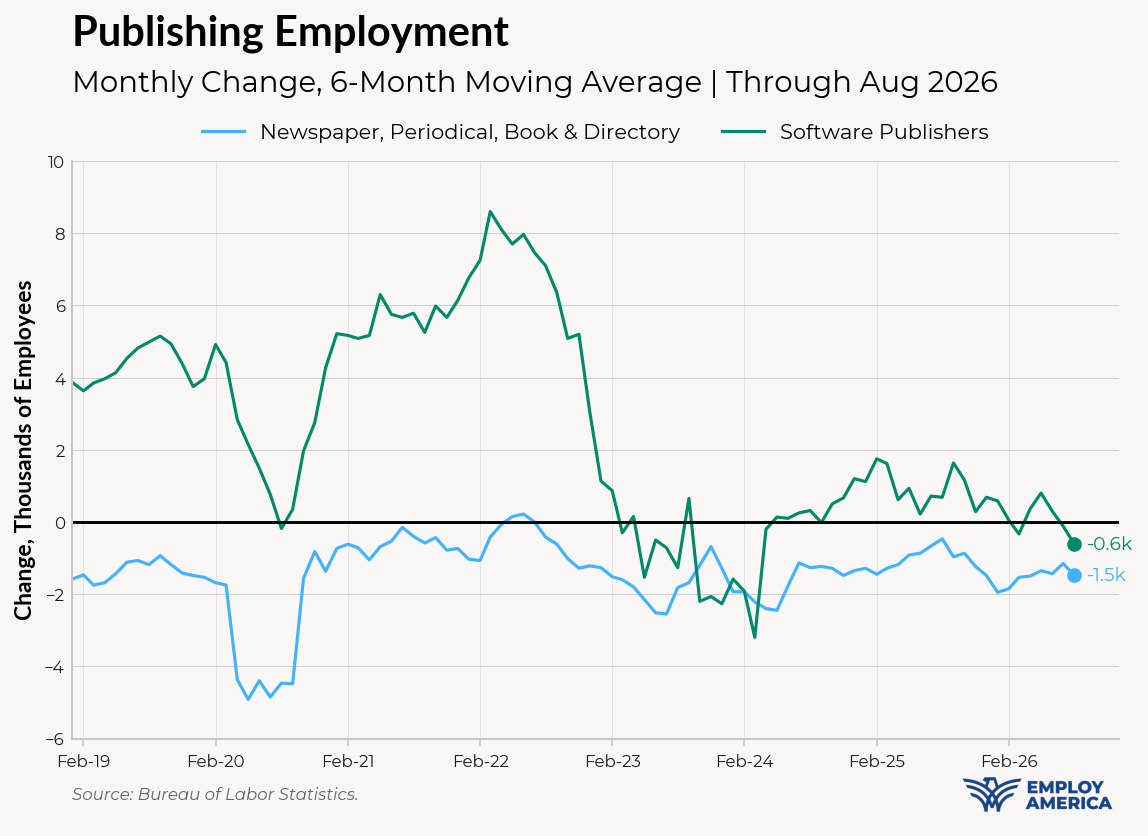
Information is often treated as a proxy for "tech," but it also includes newspapers, broadcasting, and telecom, while much of tech, like computer systems design, sits elsewhere. Within publishing, newspaper, periodical, book, and directory publishers continue their steady decline, while software publishing employment has stalled after a sharp post-pandemic surge and an unwinding at the onset of the Fed's tightening cycle.
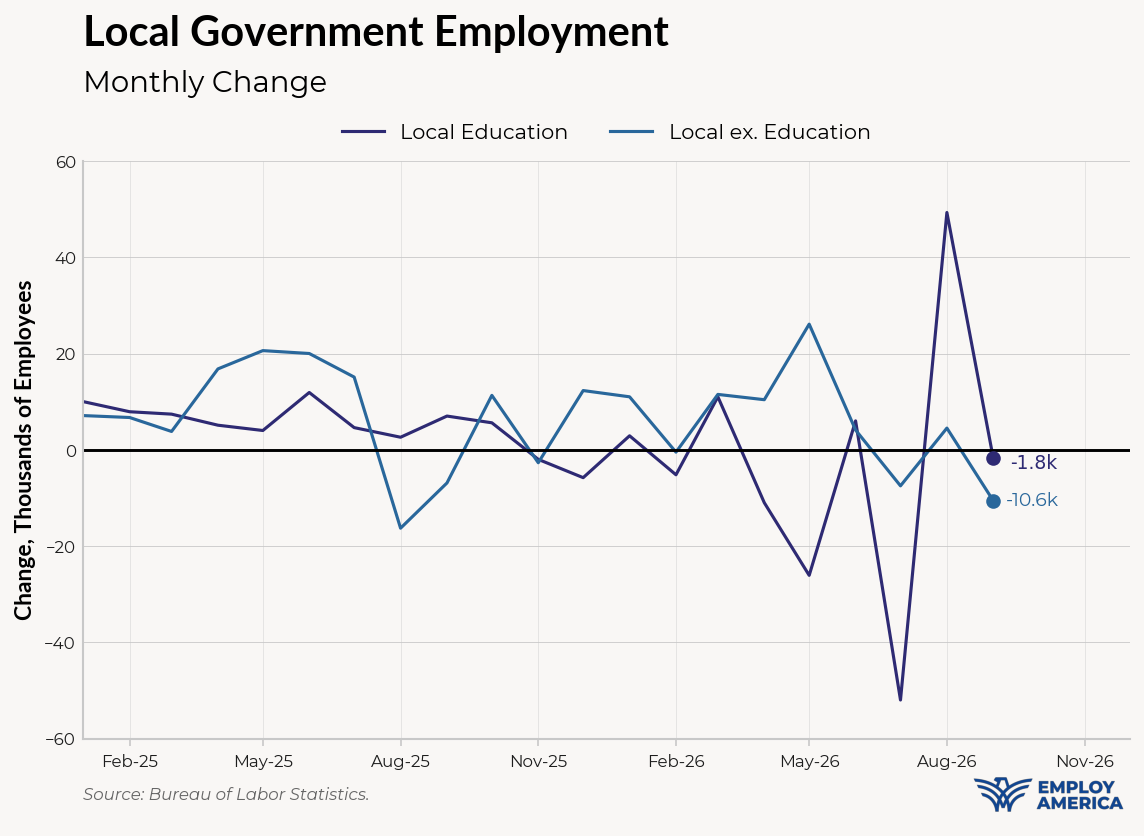
Local government shed 13,000 jobs in September, but unlike the education-driven swings of the past two months, this month's decline came from outside education.
Conclusion
Overall, the September jobs report fits the low-hire, low-fire labor market. The household data is still healthy despite the quirks. On the establishment side, payroll growth is slower, but cyclical industries are still adding jobs.
The link has been copied!
Your link has expired. Please request a new one.
Your link has expired. Please request a new one.
Your link has expired. Please request a new one.
Great! You've successfully signed up.
Great! You've successfully signed up.
Welcome back! You've successfully signed in.
Success! You now have access to additional content.