The Labor Force Participation Decline is Mostly Aging and Elderly Retirement
About two-thirds of the decline can be explained by changes in the population weights, and most of the remaining decline is due to lower participation rates amongst older workers, especially those aged 65 and older.
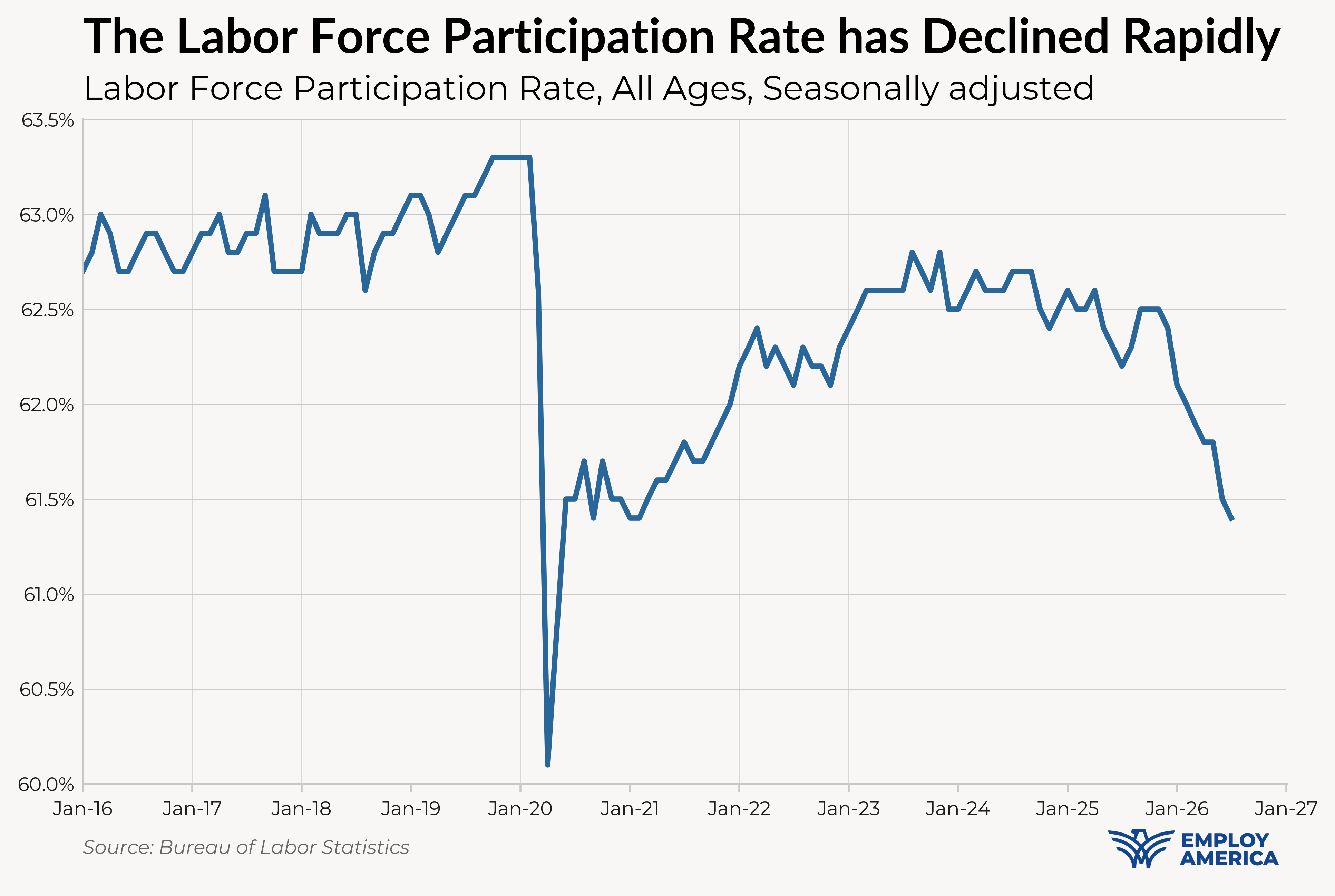
The labor force participation rate has dropped by over a percentage point since last year, and now sits at levels last seen in 2020. Some have called it "disturbing," and others have framed it as "job seekers giving up." Some see it as a reason to downplay the decline in the unemployment rate, arguing that the labor market is actually softer given the decline in participation and that workers are burned out or discouraged.
A closer look at the disaggregated data shows something much less alarming: the reason for the rapid decline in the labor force participation rate over the past year mostly reflect the aging of the population.
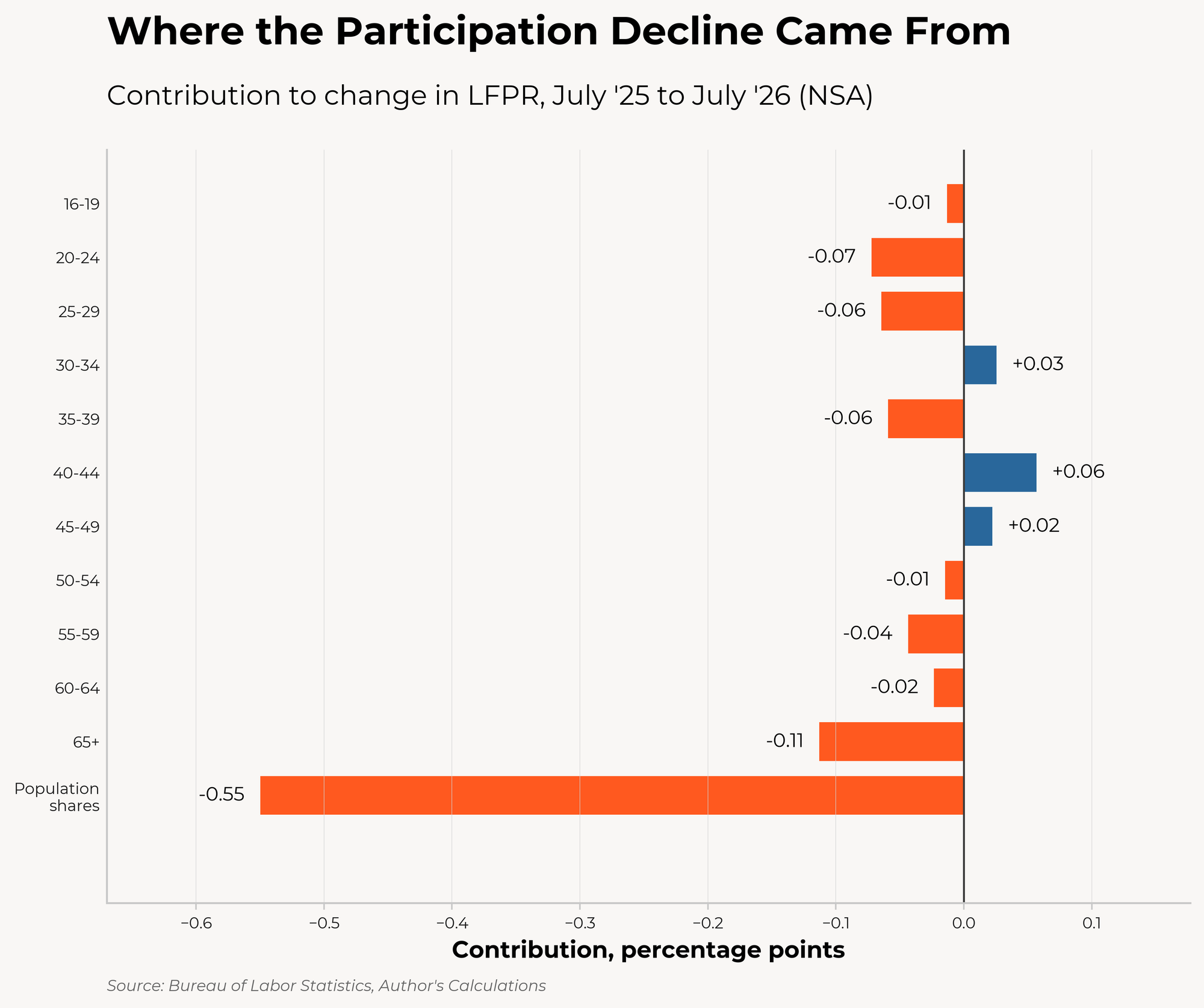
In the graph below, I use a shift-share decomposition to break down the change in all-ages labor force participation rates into changes in participation rates of the various age cohorts (holding age cohort shares constant) and changes in the age cohort shares (holding age cohort participation rates constant) between July 2025 and July 2026. Of the roughly 0.80pp decline in overall participation rates, 0.55pp can be accounted for by population shares changing, and 0.11pp comes from a decline in labor force participation amongst the oldest age group (65+).
Age group bars show contributions from changes in participation rates in those cohorts (holding the age demographic composition constant).
I'm using non-seasonally-adjusted data here, because the finer age categories are only available on a non-seasonally-adjusted basis. Both series show a similar year-on-year decline over the same period. Using the available seasonally-adjusted data would show a smaller role for age composition and a larger role for participation rate declines in the 55+ age cohort, because there are significant differences in the participation rate changes between those aged 55-64 and those aged 65+, as well as aging of the population within the broader 55+ cohort.
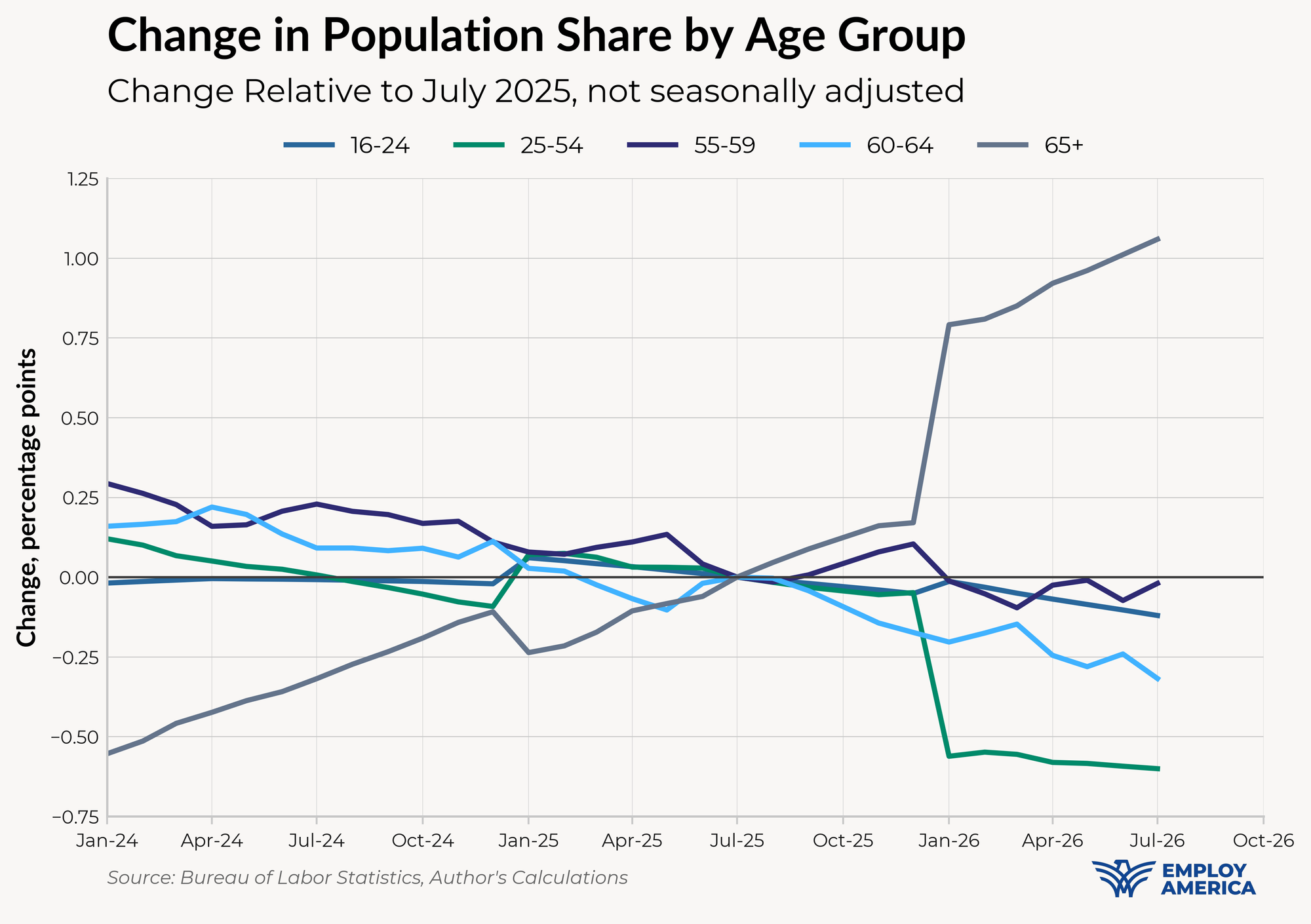
The aging of the population is a long-term, secular trend, so how can it cause such a rapid decline in the population trends? The answer lies in the fact that the Census Bureau adjusts the Current Population Survey weights annually every January, and does not readjust past data to account for those weights. This causes abrupt jumps in the CPS demographic weights of the CPS every January.
A large part of the reported decline in participation since last year happened because of the discontinuous jump in the 65+ population share in January. Since January, the 65+ population weight has continued to rise as the 60-64 population share shrinks. This has been a drag on overall labor force participation since the 65+ labor force participation rate is just under 20%, while the 60-64 rate is just under 60%.
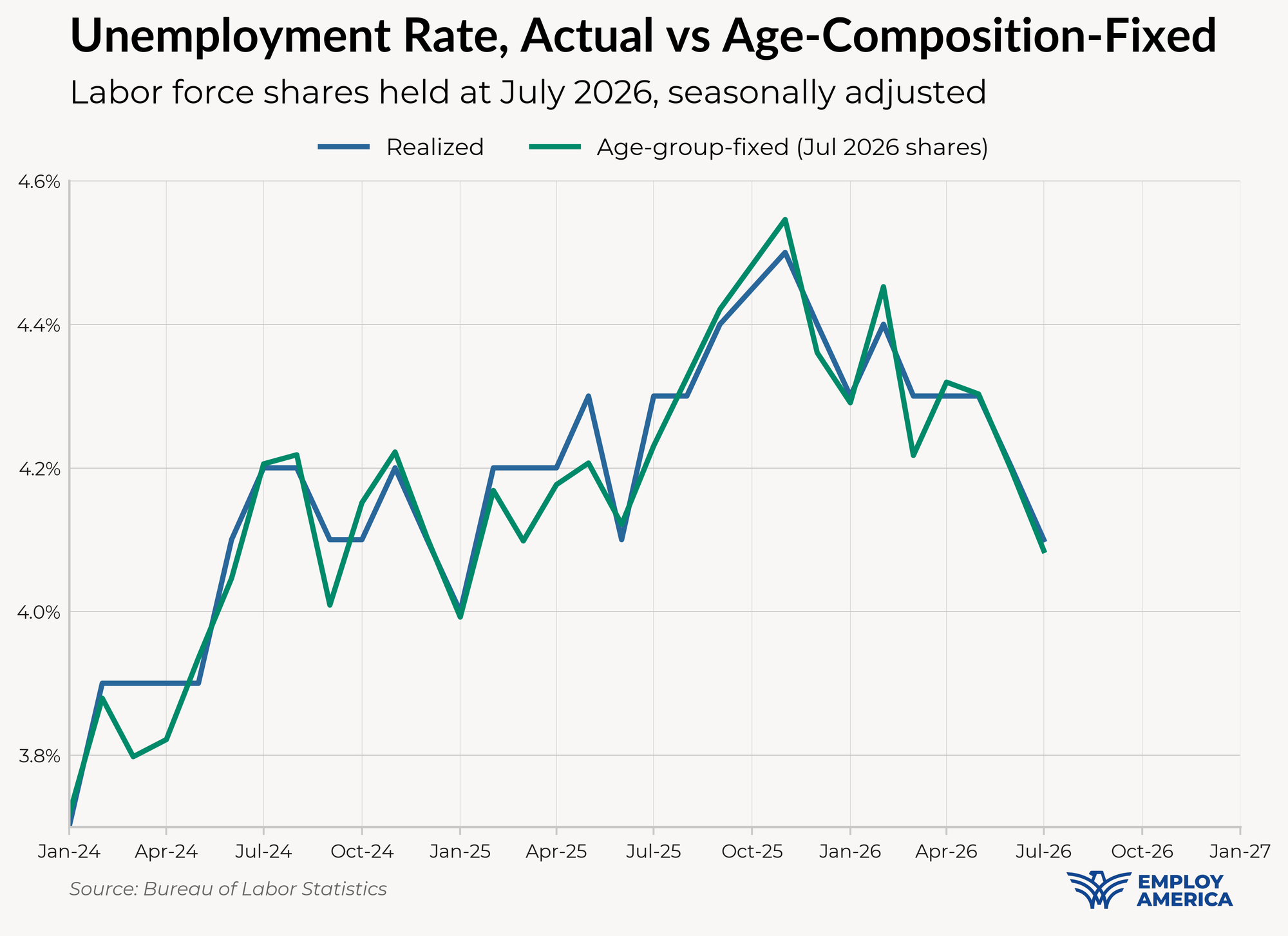
This is one reason why we are less alarmed about the latest jobs report, and are leaning more on the fact that the unemployment rate has declined and remains low. Holding the age composition of the CPS fixed has little effect on the unemployment rate trends over the past few years. As another data point, Guy Berger points out that there hasn't been an increase in the number of "discouraged workers" (those out of the labor force who want a job).
The declining labor force participation rate does have interesting ramifications for things like the future of social security and long-term growth rates. However, the rapid declines we have observed over the past year don't seem to be representative of any local, cyclical weakness in the labor market.
The link has been copied!
Your link has expired. Please request a new one.
Your link has expired. Please request a new one.
Your link has expired. Please request a new one.
Great! You've successfully signed up.
Great! You've successfully signed up.
Welcome back! You've successfully signed in.
Success! You now have access to additional content.