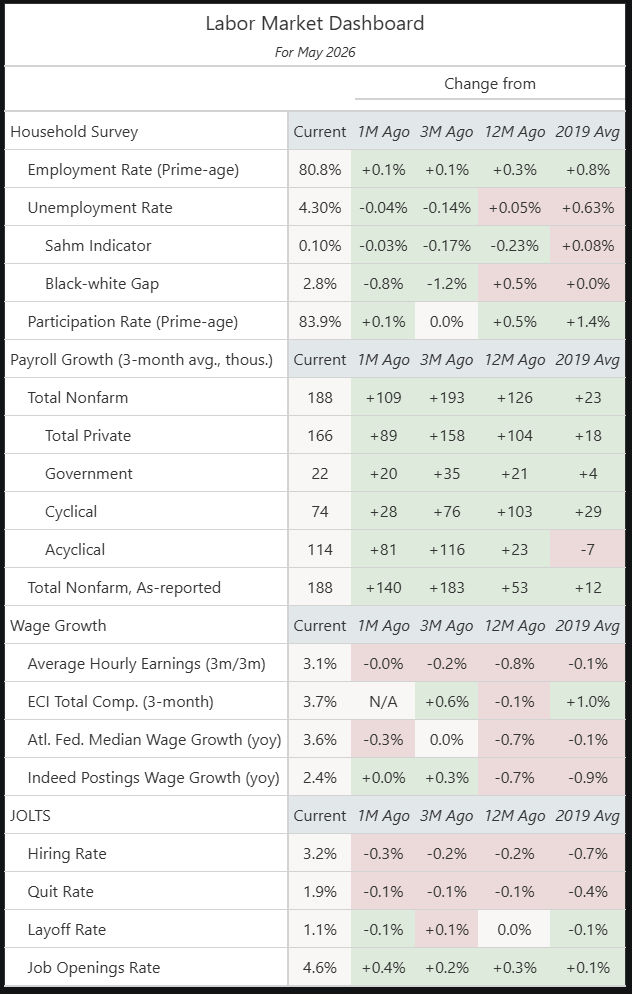
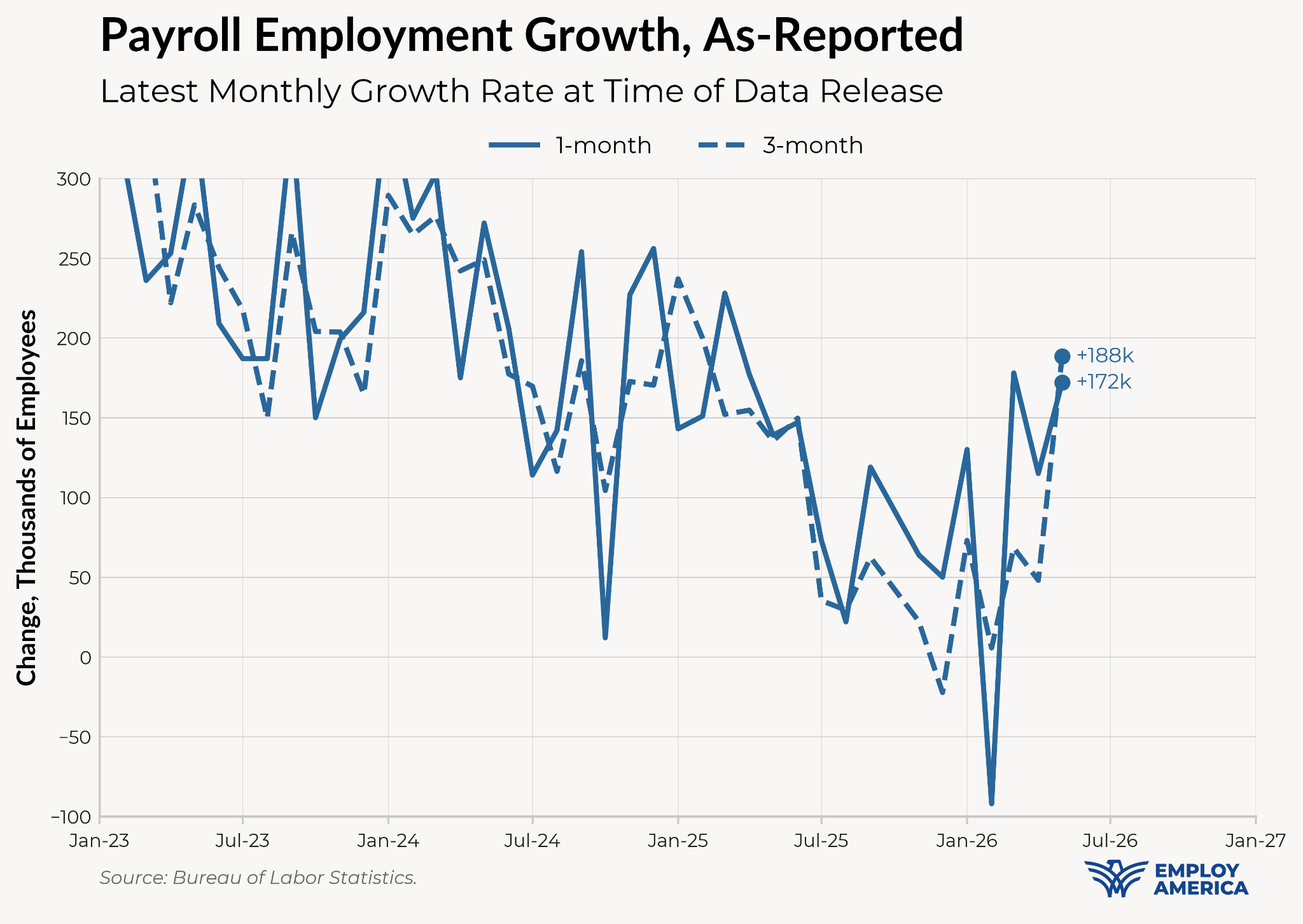
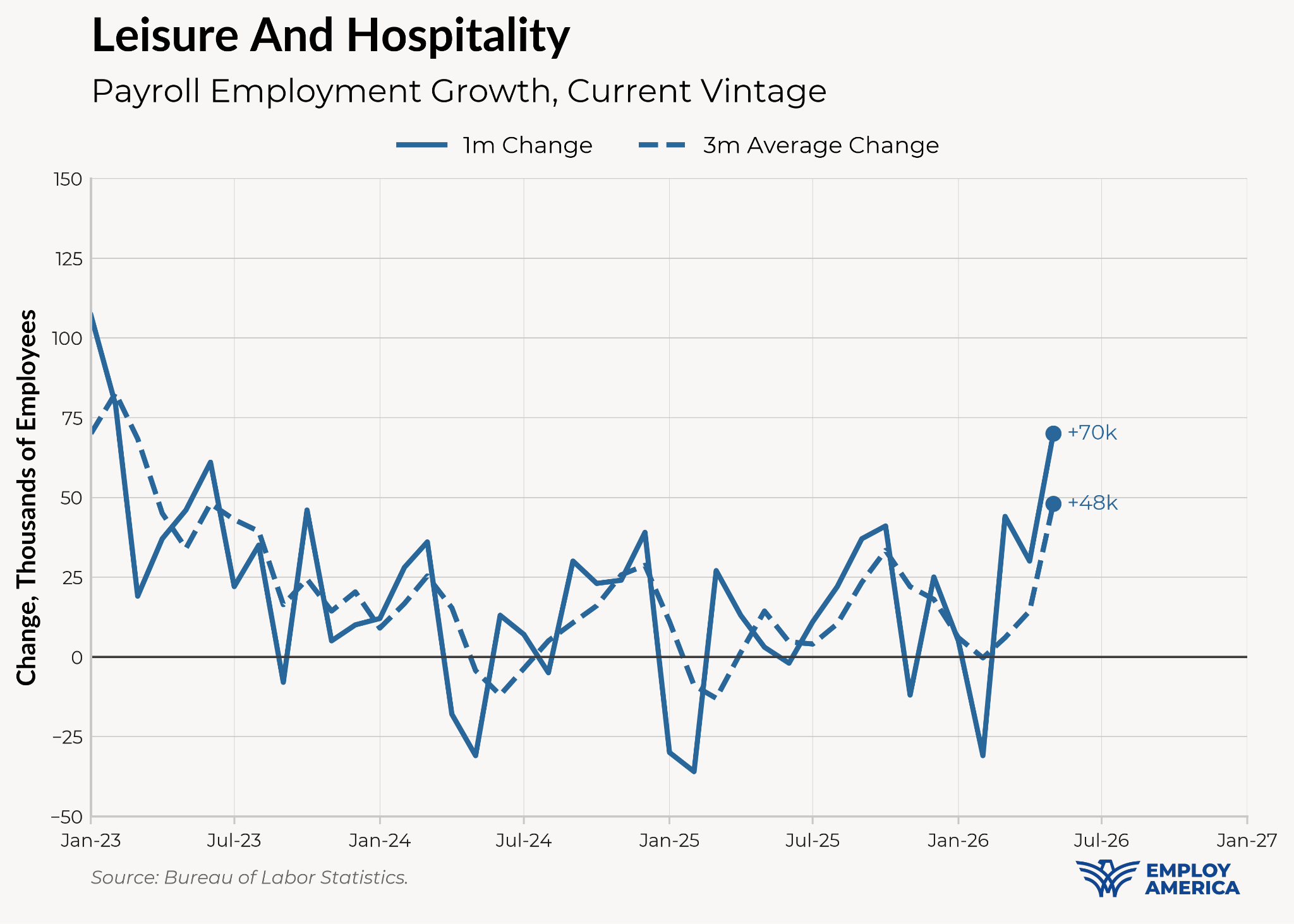
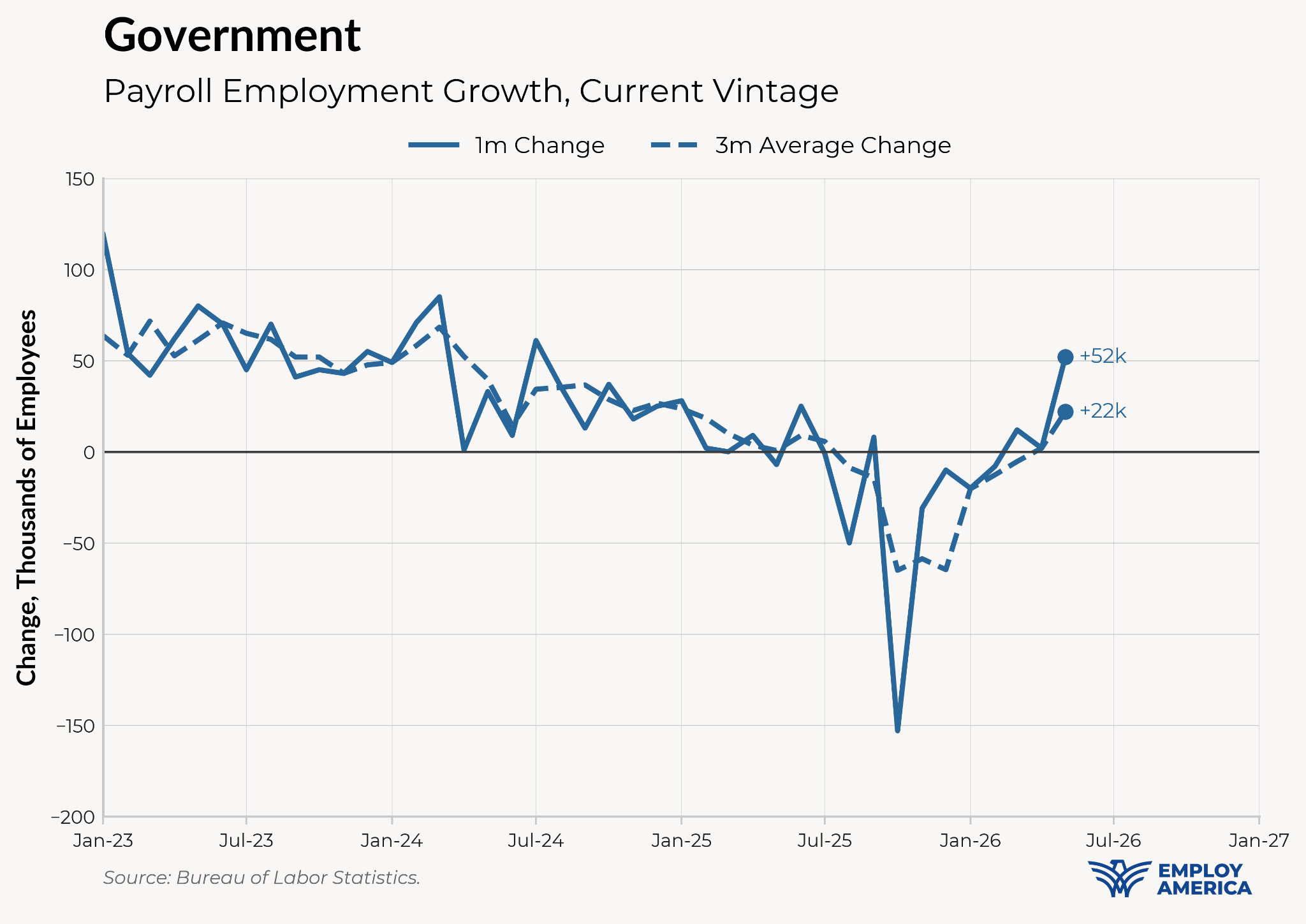
The labor market added 188,000 jobs in May, with sizable upwards revisions to previous months. Payroll growth was particularly strong in leisure and hospitality and government. The unemployment rate fell 0.04pp to 4.30%; prime-age employment rates rose marginally to 80.8%, just shy of its cycle high. Part-time for economic reasons and short-term unemployment levels are still benign. Hiring rates gave back some of its bump from last month, but job openings are up. Posted wages show a slight rebound from its nadir at the beginning of this year.
Across the board, this is a solid report. We now have two clean reads of the labor market in a row (again there was little significant strike activity and birth-death model effects look similar to last year) that show a labor market that is somewhere between stabilizing and possibly reaccelerating. The hawks at the Fed are going to have a stronger hand going into the June meeting to set up for a pivot to hikes later this year.
Source: Bureau of Labor Statistics, Author’s Calculations. Red indicates weaker labor market development; green indicates stronger.
A steady labor market
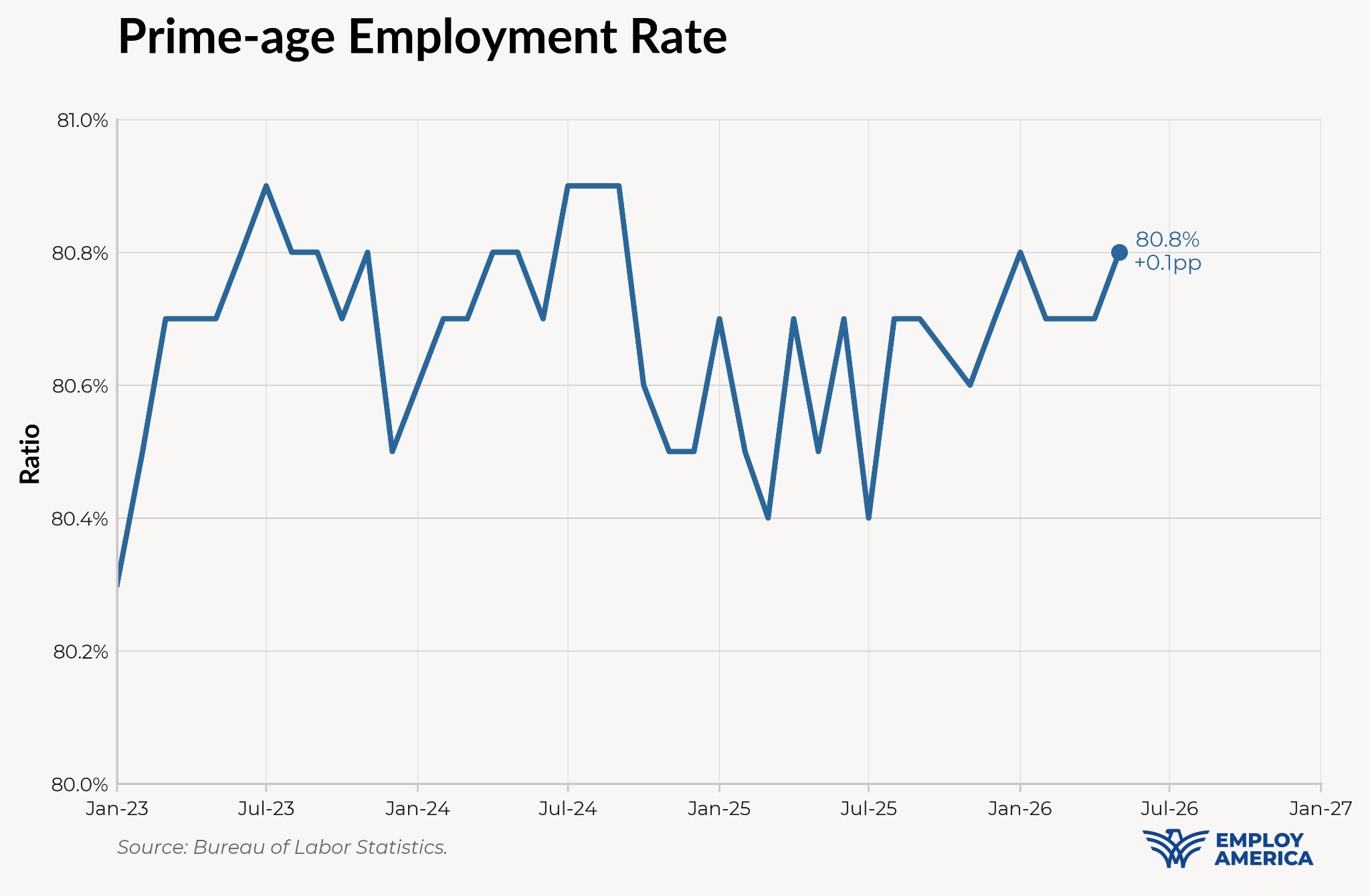
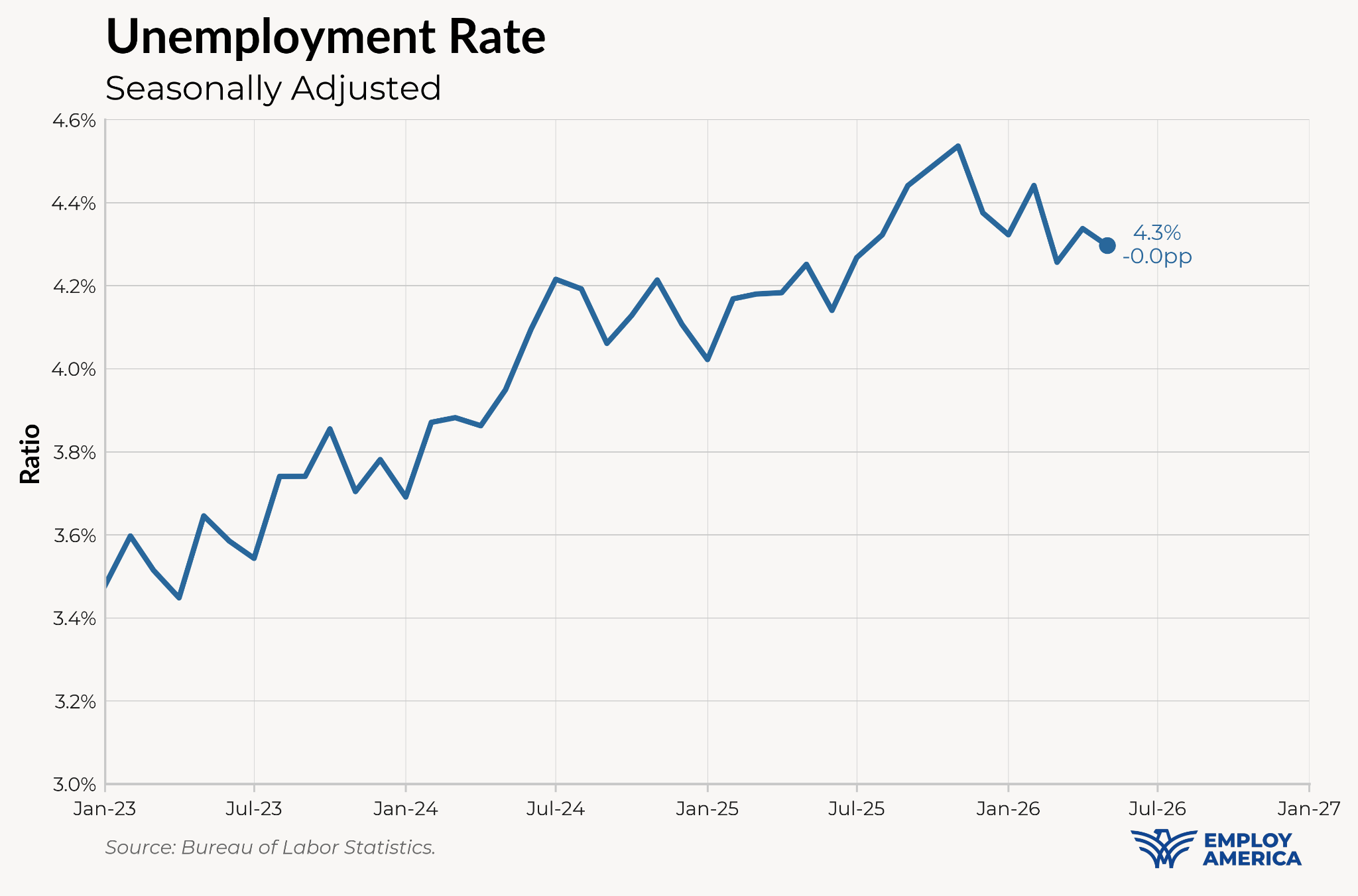
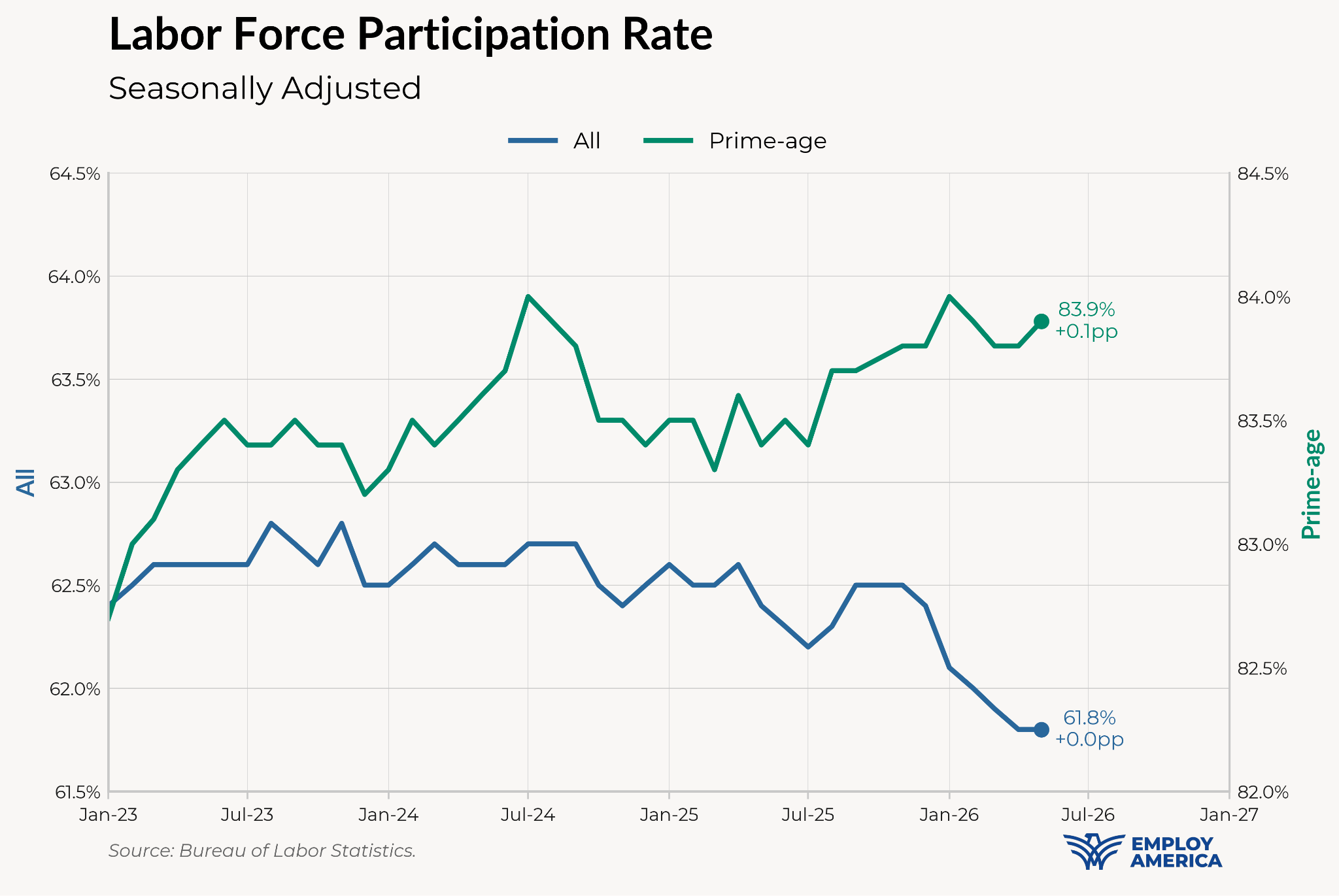
The labor market really does look like it may be turning the corner. Over the past 6 to 12 months, prime-age employment and participation rates have improved, and the unemployment rate has fallen.
We’re still in early innings, but it does seem like payrolls growth is picking up. The 3-month average payrolls growth is 172,000. These are numbers we were seeing in 2024, and a far cry from the near-0 numbers we were seeing late last year.
Some of this may be related to the World Cup coming up. Leisure and hospitality employment contributed 70,000 jobs in May, and non-education local government employment contributed 43,500 jobs. Still, the remaining job growth outside of those sectors is still fairly strong.
Outside of the headline numbers, there isn’t much of interest in the details of the report. It’s just a very good jobs report, showing a labor market that is stabilizing, or perhaps even reaccelerating.
Are Men “Losing Out?”
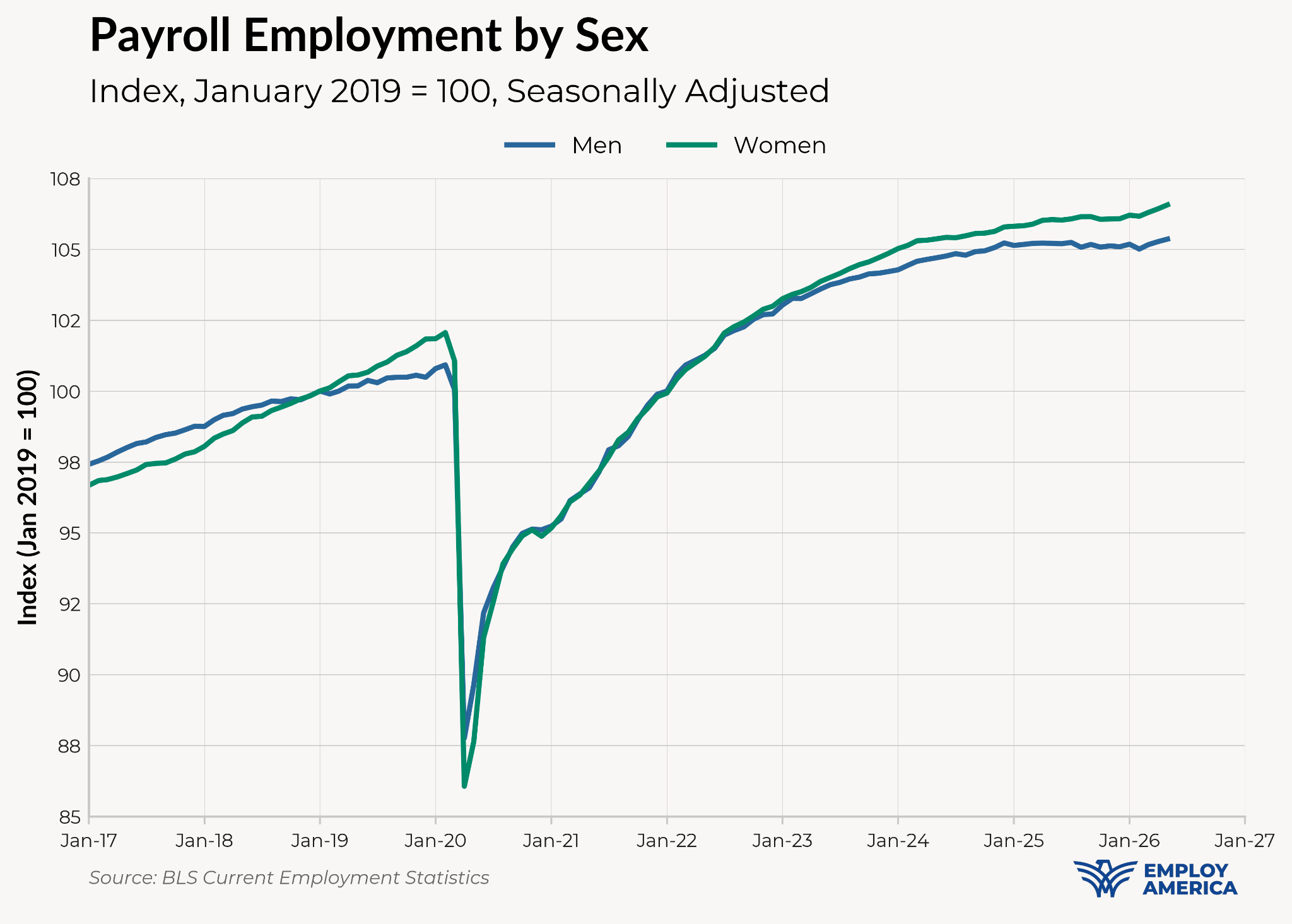
One article describes the phenomenon this way: “The American labor market is tilting away from men. Over the past year, nearly all net job growth has come from healthcare and social assistance, a sector with a dearth of men. Sectors with heavily male workforces have been losing jobs." A lot of the discussion here has to do with sectoral composition: sectors that have more women employees have grown faster since the beginning of 2025.
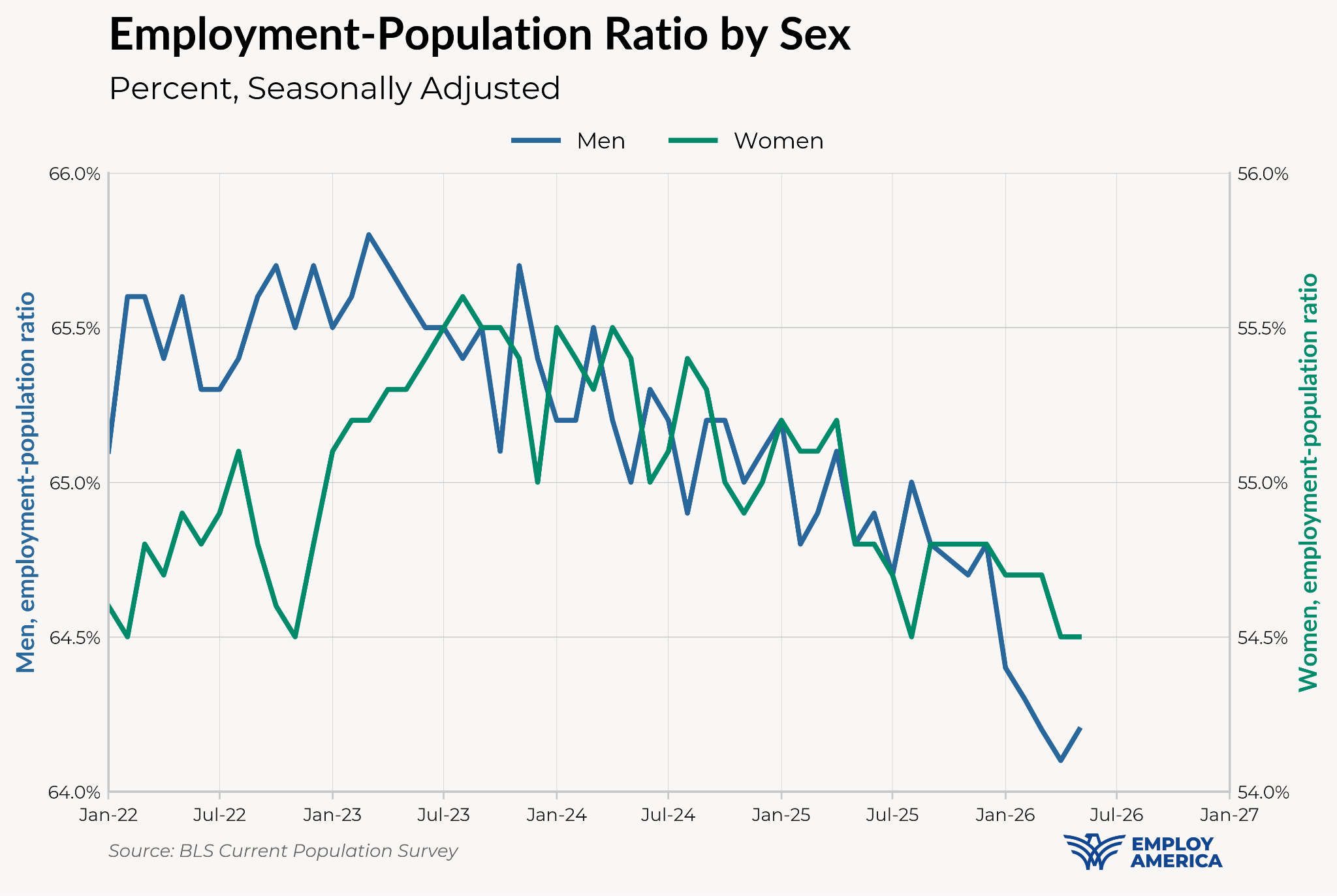
But are men really doing that poorly? Let’s take a look at the household survey data. Women’s employment rose substantially during the recovery, but since late 2023, men’s and women’s employment have mostly moved in lock-step until 2026, declining as the population ages. In 2026, men's employment fell sharply compared to women’s employment.
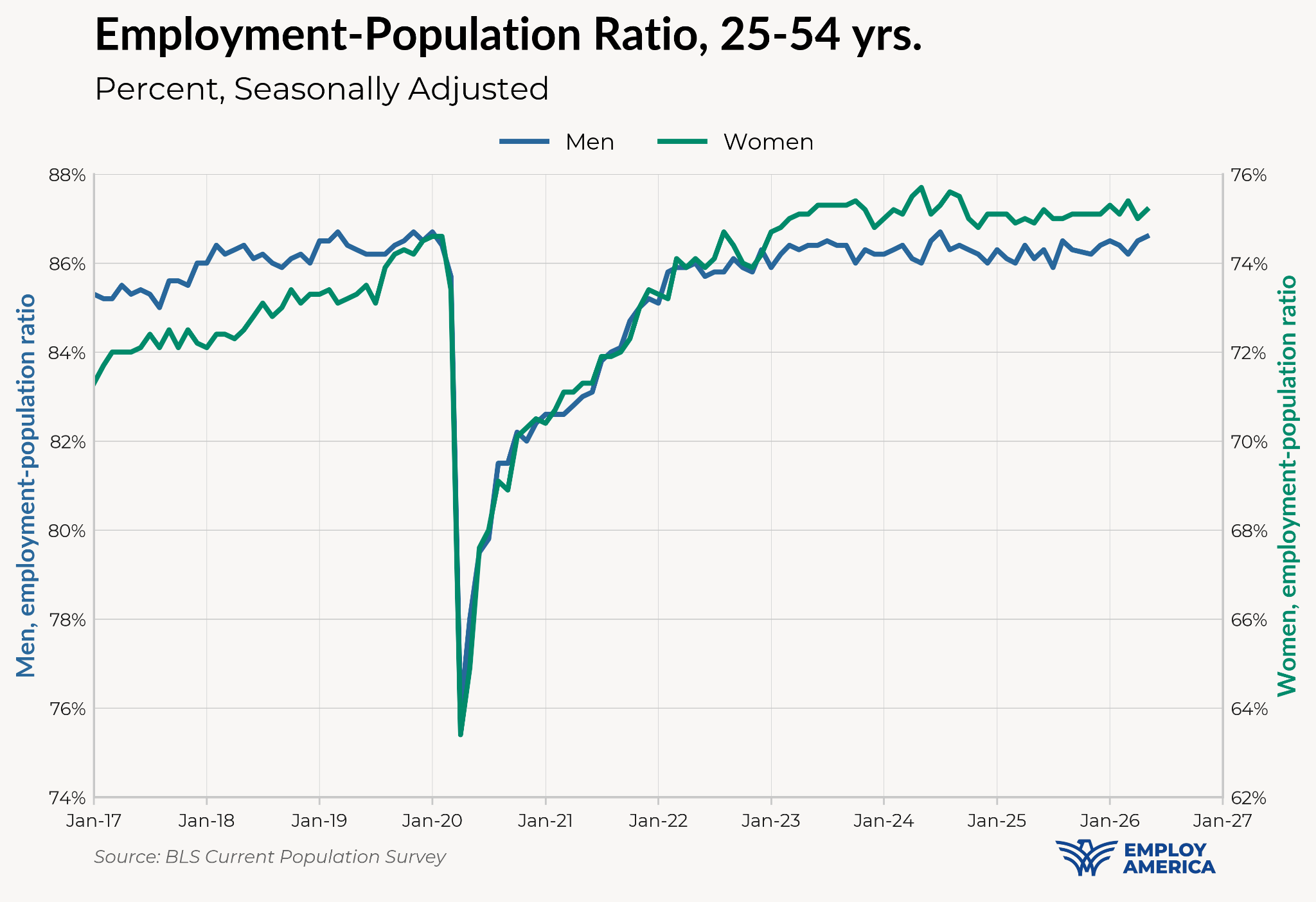
But there’s an age story here. Looking specifically at the prime-age cohort, women’s employment rates were rising faster than men’s before 2020, and gained an extra percentage point or so during the recovery. Men, on the other hand, saw employment rates right at about their 2019 levels. However, prime-age employment rates have been mostly flat for both men and women since 2023. And in the past year, men’s prime-age employment has actually improved slightly more than women’s prime-age employment. Despite the relative improvement, men’s prime-age employment is still substantially higher than women’s.
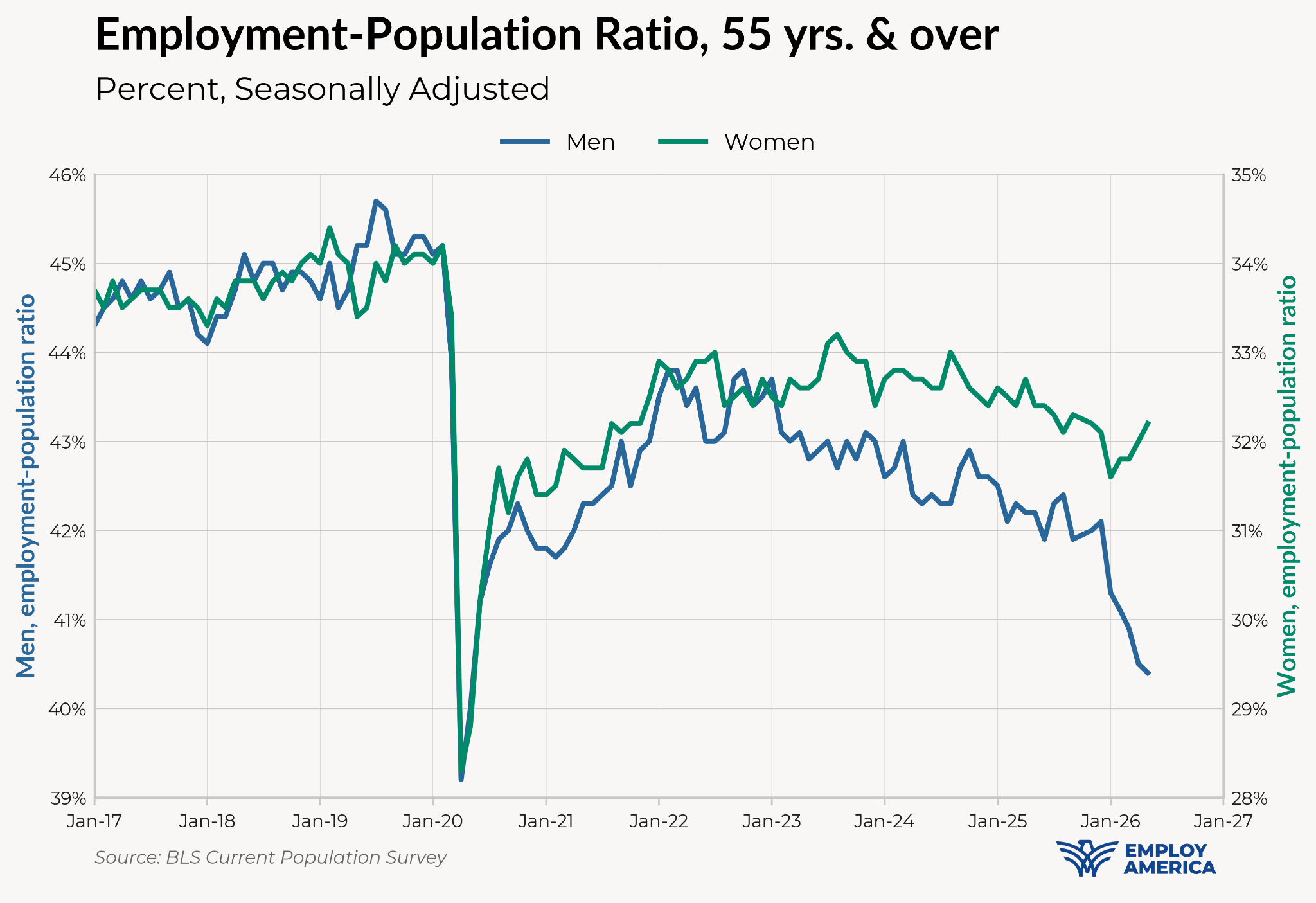
Over the past year, the relative outperformance of women’s employment actually comes from older workers. Employment rates among older men have fallen substantially, even as employment among women has bounced.
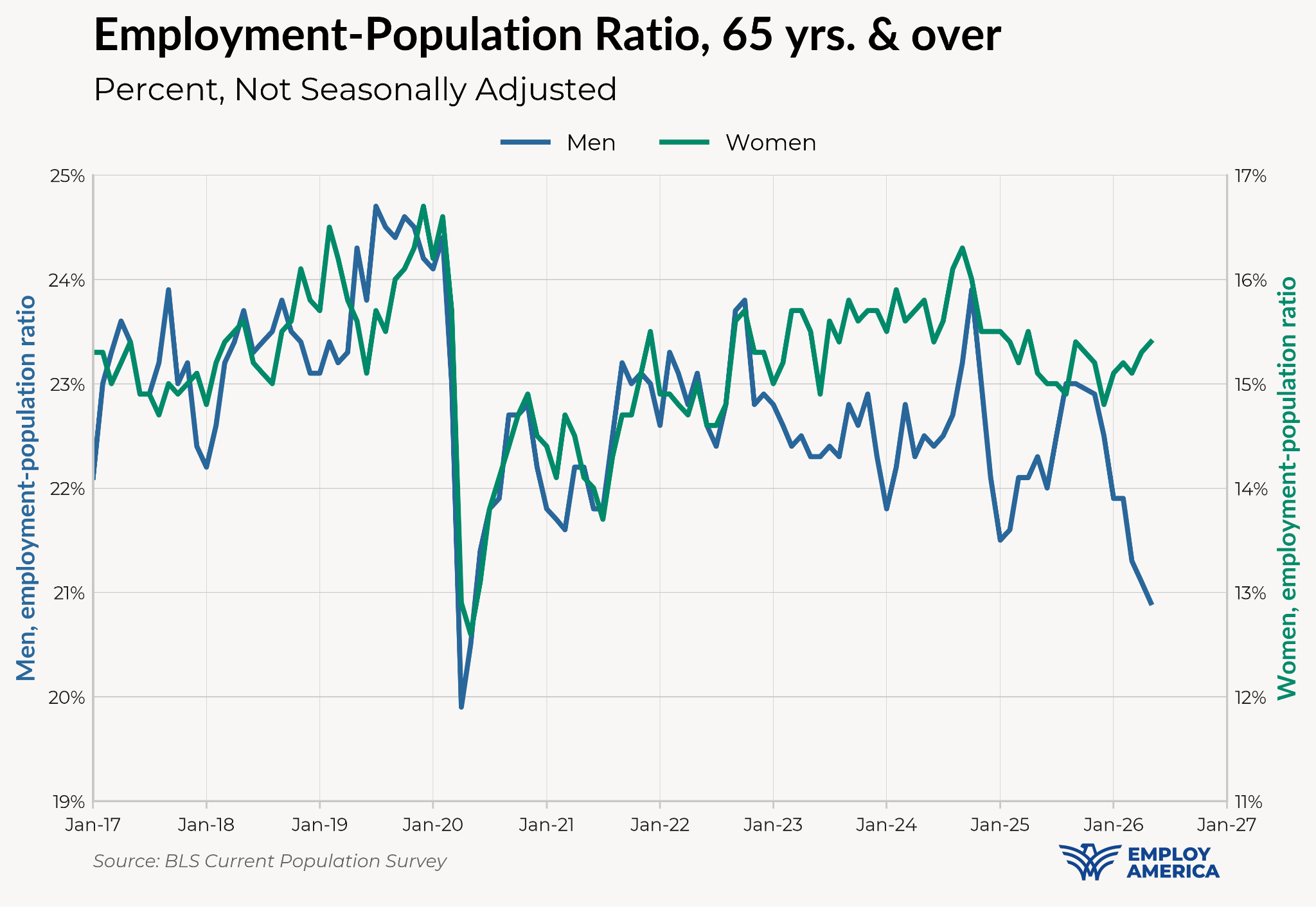
This isn’t just an “early retirement” story. Most of the relative difference in employment rates is coming from a decline in employment amongst men 65 and older, especially in the most recent months; women’s employment here has actually been improving.
Despite panicked reports that the relative outperformance of women’s employment has something to do with high levels of idle young men (whose employment rates are basically where they were 15 years ago), the most recent trend is more about septuagenarian men retiring at higher rates. Women have made substantially larger gains in the labor market since 2020, but the bulk of that difference happened a few years ago. Since then, both men and women have had pretty steady labor force measures, save for some additional retirement among older men.
A Good Labor Market Sets Up the Fed for a Hawkish Pivot
A few weeks ago, we wrote that “the combination of only moderately restrictive rates, a stabilizing—and potentially accelerating—labor market and accelerating inflation all push the Fed towards a more hawkish direction.” With the labor market showing stronger signs of reacceleration, we think the balance of risks has tilted more hawkish. Subscribers will receive an updated note with our new Fed Views soon.
The link has been copied!
Your link has expired. Please request a new one.
Your link has expired. Please request a new one.
Your link has expired. Please request a new one.
Great! You've successfully signed up.
Great! You've successfully signed up.
Welcome back! You've successfully signed in.
Success! You now have access to additional content.